Why HVAC Problems Often Start With Small Comfort Changes
A heating or cooling system rarely announces a problem with dramatic music and a flashing warning sign.
Aug 11, 2026
A heating or cooling system rarely announces a problem with dramatic music and a flashing warning sign. More often, the first clue is something easy to dismiss: one bedroom feels warmer than usual, the air coming from a vent seems weaker, or the system runs a little longer before the house becomes comfortable.
These small changes do not always mean a major repair is around the corner. However, they often indicate that something in the system is no longer working as efficiently as it should. Paying attention early gives homeowners time to investigate before a minor airflow issue, dirty component, or worn part develops into a more expensive failure.
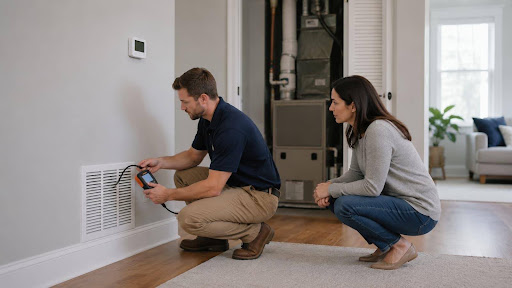
When comfort begins to change without an obvious explanation, a qualified HVAC contractorcan evaluate the entire system rather than simply treating the most noticeable symptom. That broader approach matters because HVAC problems are often connected. A warm room may appear to be an air-conditioning issue, for example, while the real cause could be a leaking duct, blocked return vent, insulation gap, or improperly sized system.
Uneven Temperatures Are Often The First Warning Sign
Most homes have minor temperature differences from room to room. An upstairs bedroom exposed to afternoon sunlight will naturally feel warmer than a shaded room on the first floor. The concern begins when the difference becomes new, persistent, or noticeably worse.
A room that once stayed comfortable but now struggles to cool may point to restricted airflow. The supply register could be blocked, a damper may have shifted, or dust buildup may be reducing air movement through the system. In other cases, damaged or disconnected ductwork may be allowing conditioned air to escape into an attic, crawl space, or wall cavity.
Return-air problems can create similar symptoms. HVAC systems must pull air back toward the equipment before heating or cooling it again. If a return grille is blocked by furniture, clogged with debris, or undersized for the system, the entire home may experience poor circulation.
Thermostat location also plays a role. A thermostat installed near a sunny window, exterior door, kitchen, or supply vent may receive a misleading temperature reading. The system then responds to conditions in that small area rather than the comfort of the home as a whole.
Homeowners should take note when:
- One room becomes consistently warmer or colder.
- Temperature differences are becoming more noticeable.
- Closing doors significantly changes comfort.
- Airflow varies sharply between nearby vents.
- The thermostat reaches its setting, but parts of the home remain uncomfortable.
None of these clues identifies the cause on its own. Together, however, they suggest that airflow, duct design, insulation, or system performance deserves a closer look.
Longer Run Times Can Signal Declining Performance
An air conditioner or heat pump should run long enough to change the indoor temperature gradually and control humidity. A long cycle is not automatically a problem, especially during very hot or cold weather. The more meaningful question is whether the system is running longer than it used to under similar conditions.
Several issues can make HVAC equipment work harder. A dirty filter restricts airflow, forcing the blower to move air through a smaller effective opening. Dirt on the evaporator or condenser coil interferes with heat transfer. Low refrigerant levels, worn motors, duct leakage, and failing electrical components can also reduce performance.
Homeowners often notice the comfort change before they recognize the mechanical issue. The house may still reach the thermostat setting, but it takes longer. Indoor humidity may remain higher. The temperature may rise quickly as soon as the system switches off.
This stage is easy to ignore because the equipment technically still works. Unfortunately, a system that must operate longer to produce the same result usually consumes more energy and places additional stress on its components.
A few practical questions can help:
- Is the system running almost continuously during ordinary weather?
- Does it take much longer to reach the thermostat setting?
- Are electricity bills rising without a major change in usage?
- Does the home feel humid even when the temperature seems correct?
- Does the system lose ground during the hottest part of the day?
A dirty filter may be the entire explanation, which is the HVAC equivalent of discovering that the mysterious car noise was caused by a loose water bottle. But when a clean filter does not improve performance, professional diagnostics are usually the next sensible step.
Small Airflow Changes Can Point To Bigger Issues
Weak airflow is one of the most common early signs of an HVAC problem. It may affect the entire house or only one section of the duct system.
The cause can be simple. A register may be closed, a filter may be clogged, or furniture may be blocking a return. Yet weak airflow can also result from blower motor problems, duct restrictions, crushed flexible ductwork, dirty indoor coils, or excessive static pressure.
Static pressure is resistance to airflow inside the duct system. When resistance becomes too high, the blower has to work harder to circulate air. This can reduce comfort, increase noise, raise energy consumption, and shorten the life of the motor.
Poor airflow can also contribute to frozen evaporator coils. The coil needs a steady volume of warm indoor air passing over it. If airflow drops too far, the coil can become excessively cold, causing condensation to freeze on its surface. The homeowner may first notice weak cooling, ice on a refrigerant line, or water near the indoor unit after the ice melts.
Airflow should therefore be evaluated as part of the whole system rather than treated as a vent-by-vent inconvenience. Simply closing additional registers to push more air toward one room can increase pressure and make the underlying problem worse.
If airflow has been poor since the system was installed, equipment selection or duct design may be involved. A properly planned AC installation serviceshould consider the home’s cooling load, duct capacity, return-air pathways, equipment placement, and airflow requirements. Even high-efficiency equipment cannot perform properly when connected to a duct system that cannot support it.
Unusual Sounds And Odors Should Not Be Dismissed
HVAC equipment is not silent. Fans, compressors, motors, refrigerant movement, and expanding ductwork all produce some sound. Homeowners usually become familiar with the normal operating noises of their system, which makes new sounds especially useful as warning signs.
A light rattle may come from a loose panel or register. Whistling can indicate restricted airflow. Grinding or scraping may point to a motor, bearing, or fan problem. Repeated clicking can be associated with controls, relays, or ignition components.
Heat pumps can be particularly confusing because they operate in both heating and cooling modes and periodically enter a defrost cycle during cold weather. Some changes in sound are normal. Persistent banging, loud buzzing, repeated shutdowns, or unusual icing are not.
A timely heat pump repairmay prevent a worn fan motor, sensor issue, refrigerant problem, or electrical fault from causing broader damage. Continuing to operate equipment that is making a serious mechanical sound can turn a replaceable part into a failed assembly.
Odors also provide useful clues. A dusty smell during the first heating cycle of the season may be temporary. A persistent musty odor could point to moisture in the drain pan, coil area, ductwork, or nearby building materials. A burning smell, melting-plastic odor, or sharp electrical scent should be taken more seriously, and the system may need to be switched off until it can be inspected safely.
Comfort Problems Are Easier To Solve When Documented Early
Homeowners do not need technical training to provide useful information during an HVAC inspection. A few observations can save diagnostic time and help a technician reproduce the problem.
It is helpful to record:
- Which rooms are affected.
- Whether the issue occurs during heating, cooling, or both.
- The time of day the problem is most noticeable.
- Outdoor weather conditions.
- Thermostat settings and indoor temperature readings.
- Any unusual sounds, smells, leaks, or ice.
- Recent filter changes, renovations, or thermostat adjustments.
Patterns often reveal more than a single snapshot. A room that overheats only in the afternoon may have a solar-gain or insulation issue. Weak airflow that appears only when several bedroom doors are closed may indicate inadequate return-air pathways. A heat pump that struggles only during colder weather may have a control, capacity, or auxiliary-heat problem.
It is also important not to assume every comfort complaint requires new equipment. Duct sealing, airflow balancing, insulation improvements, thermostat relocation, coil cleaning, or component repair may restore performance. Conversely, repeated repairs on aging, inefficient equipment may eventually cost more than replacement.
The right decision depends on the system’s condition, age, installation quality, repair history, operating costs, and the extent of the comfort problem.
Conclusion
Small comfort changes are valuable because they often appear before complete system failure. Uneven temperatures, weak airflow, longer run times, excess humidity, new noises, or unusual odors may seem minor at first, but they can reveal developing problems with airflow, controls, refrigerant, electrical components, ductwork, or equipment performance.
The goal is not to panic every time one room feels slightly warm. Homes are complex, weather changes, and no HVAC system creates perfectly identical conditions everywhere. The smarter approach is to notice changes, check simple causes such as filters and blocked vents, and seek professional evaluation when the issue persists or worsens.
Addressing a small problem early is usually less disruptive than waiting for the system to stop working during the hottest afternoon of the summer or the coldest night of the year—because HVAC equipment, like household appliances and small children, seems to have an uncanny sense of timing.