25 High Protein Lunch Ideas For Work, School, And The Gym [With Full Recipes]
Every idea here comes with the steps, the protein count, and how long it keeps in the fridge. Sorted by goal, so you can skip to the lunches that fit your week.
![25 High Protein Lunch Ideas For Work, School, And The Gym [With Full Recipes]](https://www.dailyhawker.com/wp-content/uploads/2026/09/032ff9b8a11ae650/high-protein-lunch-ideas.jpeg)
Sep 16, 2026
It’s 2:40 p.m., you had lunch barely an hour ago, and somehow you’re already thinking about what you can grab from the vending machine. If that sounds familiar, the problem probably isn’t your willpower. Your lunch may simply not have had enough protein to keep you full.
The good news is that building a filling, high-protein lunch doesn’t have to be complicated. Start with a good protein source, add something to round it out, and choose foods that are easy to pack and take with you. The 25 lunches below follow that simple formula and are organized around the things that usually matter most.
The protein amounts are estimates for the finished portions, based on standard values from USDA FoodData Central. Actual numbers can vary by portion size and brand, so think of them as a useful estimate rather than an exact measurement.
Here's a snapshot of what's inside:
- The per-meal protein number your goal actually calls for, and why it changes if you are cutting versus building.
- Twenty-five complete lunches with ingredients, numbered steps, an estimated protein count, and how many days each one keeps.
- A packing safety checklist built on the USDA's danger zone rules, which almost no lunch roundup bothers to mention.
- A 45-minute Sunday session that produces the components for four different lunches.
- The four mistakes that quietly turn a "high-protein" lunch into a 14-gram one.
How Much Protein A Lunch Actually Needs
Before picking a recipe, it helps to know what number you are aiming at, because the target genuinely differs depending on what you want from the meal.
The National Academies' baseline recommendation is 0.8 grams of protein per kilogram of body weight per day, which is a floor for preventing deficiency rather than an optimal target. The International Society of Sports Nutrition puts the useful range for people who train at 1.4 to 2.0 grams per kilogram per day. For a 160-pound adult, that's roughly 100 to 145 grams spread across the day.
Split across three meals, that lands most people between 25 and 45 grams at lunch. Here is how the number shifts by goal.
- Losing fat:Aim for 30 to 40 grams, and prioritize protein per calorie. Higher protein intake during a calorie deficitis most consistently linked to preserving lean mass and controlling appetite, not burning fat faster. The evidence is also mixed in older adults, where at least one controlled trial found no lean-mass advantage from higher protein during restriction.
- Building muscle:Aim for 35 to 45 grams. The ISSN's per-serving guidance is roughly 0.25 grams per kilogram of body weight, or 20 to 40 grams, with the muscle-building response generally plateauing near the top of that range.
- Just wanting to stop crashing at 3 pm:Aim for 25 to 30 grams and pair it with fiber. That combination slows digestion and keeps blood sugar steadier than a carb-dominant lunch.
Build A 30-gram Lunch In Three Moves
- Pick one anchor:Four to five ounces of cooked chicken, fish, beef, tofu, or paneer. This does the heavy lifting and gets you 22 to 35 grams on its own.
- Add one booster:Half a cup of Greek yogurt, cottage cheese, beans, lentils, or edamame, or one to two eggs. This adds 6 to 12 grams and usually adds fiber too.
- Fill the rest with volume:Vegetables, a grain, or a wrap. This is for satisfaction and staying power, not for the protein count.
Get those three moves right and the specific recipe barely matters, which is exactly why the twenty-five below all share the same skeleton.
The Nine Protein Sources Worth Building Lunch Around
Stocking a short list of reliable proteins beats memorizing recipes. These nine cover every lunch on this page.
- Chicken breast:About 35 grams per 4 ounces cooked. The most versatile anchor, and rotisserie chicken removes the cooking step entirely.
- Eggs:About 6 grams each. Cheap, portable, and the backbone of egg salad and egg bites.
- Greek yogurt:About 22 grams per cup, nonfat. Works as a booster, a dressing base, and a mayo replacement.
- Cottage cheese:About 24 grams per cup. High protein per calorie, and it blends smoothly if the texture is a problem.
- Canned tuna and salmon:About 20 to 25 grams per 5-ounce can or pouch. The cheapest no-cook protein on the shelf.
- Lentils:About 18 grams per cooked cup, plus 15 grams of fiber. Cooks from dry in 20 minutes, no soaking.
- Chickpeas and beans:About 7 to 15 grams per cooked cup, depending on type. Best used as boosters rather than anchors.
- Tofu and paneer:Roughly 15 grams per 6 ounces of firm tofu, and about 22 grams per 4 ounces of paneer. Both take on whatever flavor you give them.
- Edamame:About 9 grams per half cup shelled. Buy it frozen and shelled; it takes three minutes.
Keep six of these nine in the house, and you can build a 30-gram lunch without a plan.
High Protein Lunch Ideas For Weight Loss
These four focus on protein density, giving you plenty of protein for the calories while still providing enough food to make lunch feel satisfying.
If you’re eating in a modest calorie deficit but regularly reach dinner feeling extremely hungry, your lunch may be part of the problem. A 400-calorie meal made mostly of carbohydrates can leave you wanting more a few hours later. Choosing one of these protein-rich options can help you stay fuller and make the rest of your afternoon easier.
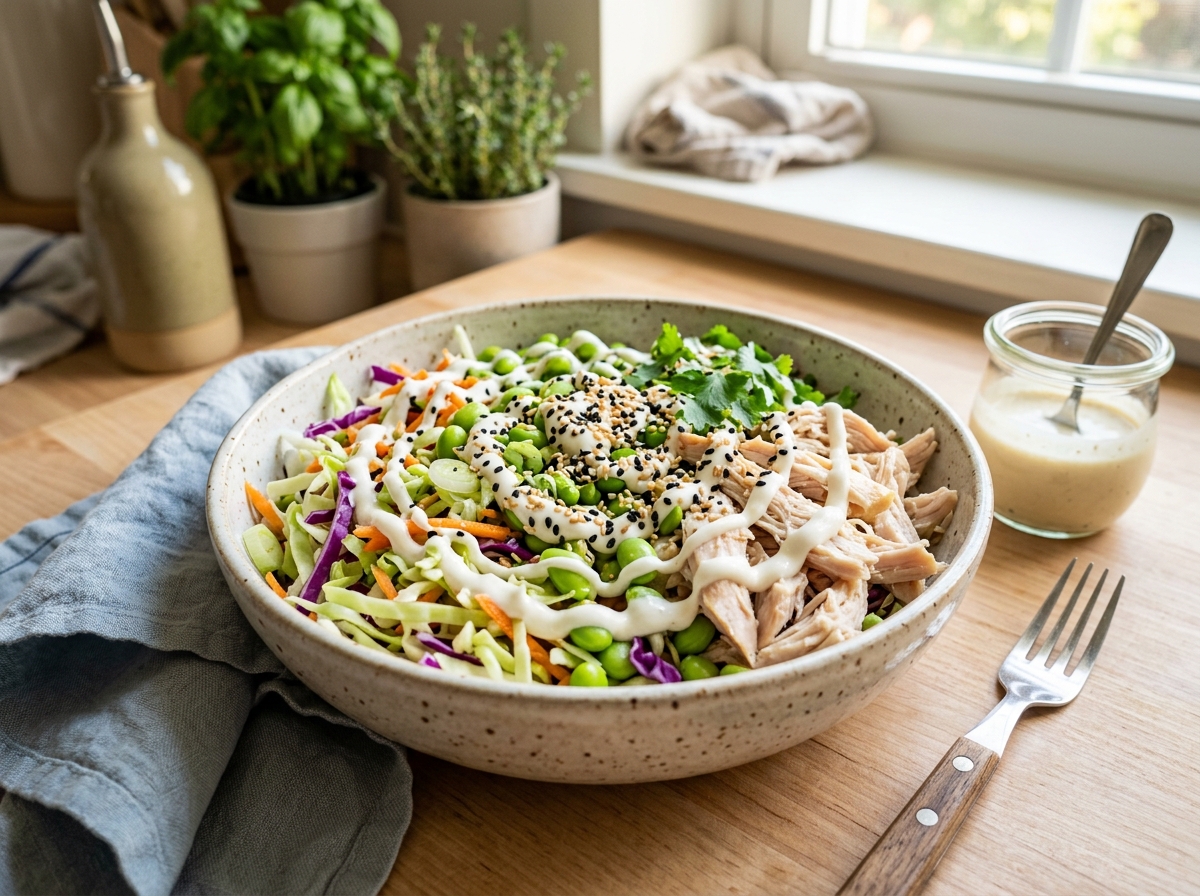
1. Shredded Chicken And Cabbage Crunch Bowl With Greek Yogurt Sesame Dressing
About 38 grams of protein. 10 minutes. Keeps 4 days.
Cabbage is the quiet hero here. It holds its crunch for days in a dressed salad, which almost no other leafy vegetable does.
What you need
- 4 ounces cooked chicken breast, shredded
- 2 cups shredded green or red cabbage
- 1 carrot, grated
- 2 scallions, sliced
- 1/4 cup plain nonfat Greek yogurt
- 1 tablespoon rice vinegar
- 2 teaspoons soy sauce
- 1 teaspoon toasted sesame oil
- 1 teaspoon honey
- 1 tablespoon sesame seeds
How to make it
- Whisk the yogurt, rice vinegar, soy sauce, sesame oil, and honey in the bottom of a container until smooth. If it's too thick to pour, loosen it with a teaspoon of water.
- Pile the cabbage, carrot, and scallions on top of the dressing without stirring.
- Add the shredded chicken in a layer over the vegetables and scatter the sesame seeds on top.
- Seal and refrigerate. Shake or stir right before eating so the dressing coats everything at the last minute.
Keeping the dressing at the bottom is what lets this one survive four days instead of one.
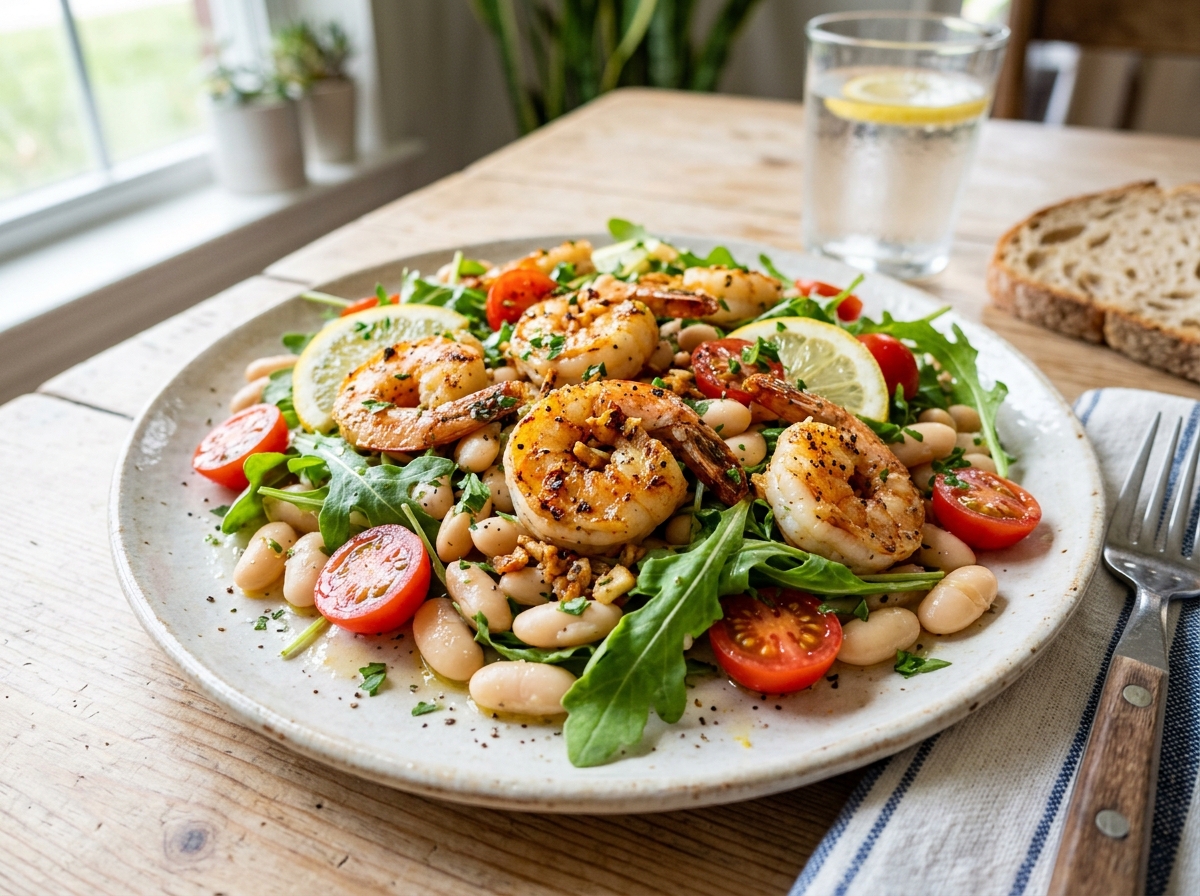
2. Garlic Shrimp And White Bean Lemon Salad
About 35 grams protein. 12 minutes. Keeps 3 days.
Shrimp cooks in three minutes and stays pleasant cold, which makes it a badly underused meal-prep protein.
What you need
- 5 ounces raw peeled shrimp
- 1/2 cup canned cannellini beans, rinsed
- 2 cloves garlic, thinly sliced
- 1 tablespoon olive oil
- Juice and zest of half a lemon
- 1 cup arugula or baby spinach
- 8 cherry tomatoes, halved
- Salt, black pepper, red pepper flakes
How to make it
- Pat the shrimp dry with paper towels. Steam the shrimp instead of searing.
- Heat the olive oil in a skillet over medium-high heat. Add the garlic and cook for 30 seconds until fragrant but not browned.
- Add the shrimp in a single layer, season with salt and red pepper flakes, and cook about 90 seconds per side until just opaque. Pull them off the heat immediately.
- Tip the shrimp and garlic oil into a bowl with the beans, tomatoes, lemon juice, and zest. Toss and let it cool.
- Pack the greens separately and combine them in the morning you eat it.
Slightly undercooking the shrimp is the right call, since they firm up further as they chill.
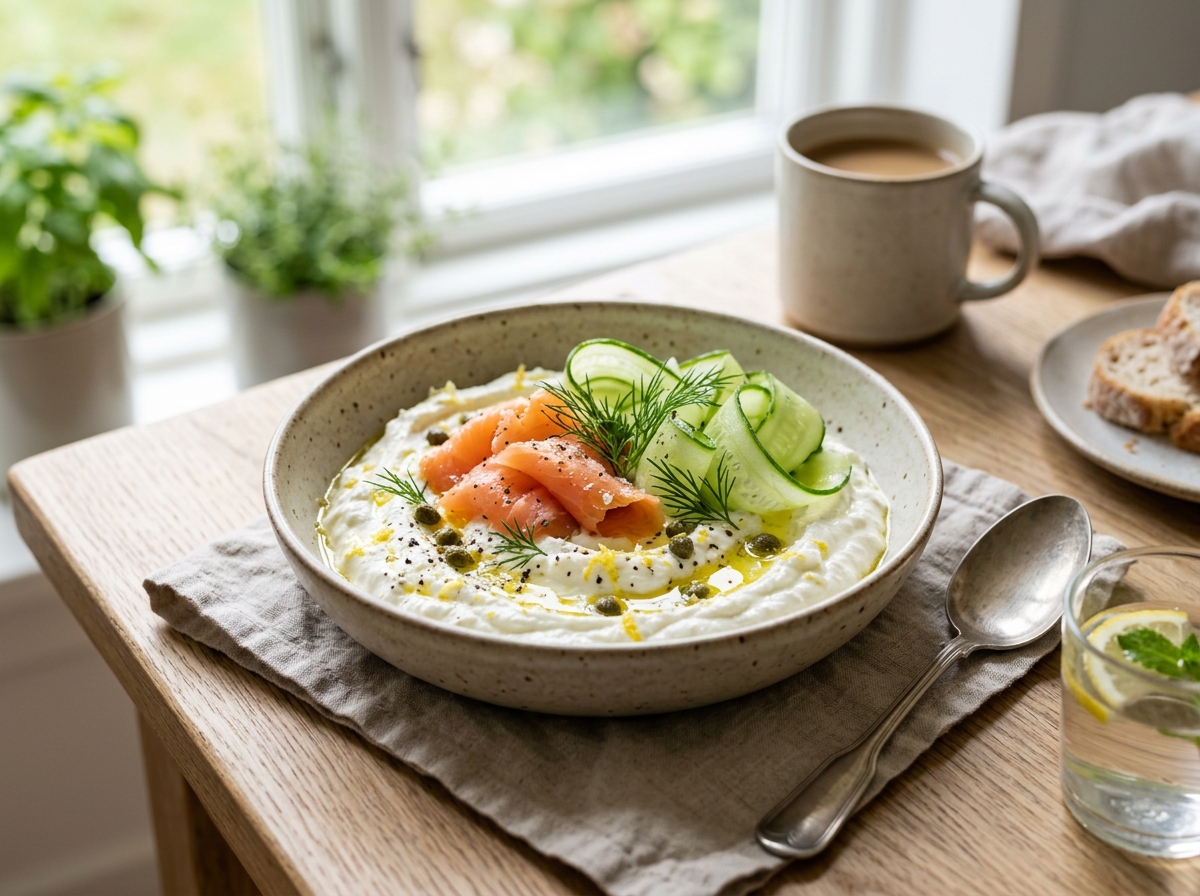
3. Whipped Cottage Cheese Bowl With Smoked Salmon And Cucumber
About 35 grams of protein. 5 minutes. Keeps 2 days.
Anyone who has rejected cottage cheese on texture grounds should try it blended. Thirty seconds in a food processor turns it into something closer to whipped ricotta.
What you need
- 1 cup low-fat cottage cheese
- 2 ounces smoked salmon
- Half a cucumber, sliced into half-moons
- 1 teaspoon everything bagel seasoning
- 1 teaspoon lemon juice
- 1 tablespoon fresh dill, chopped
- Olive oil for drizzling
How to make it
- Blend the cottage cheese with the lemon juice in a small food processor or blender for 30 to 45 seconds, until completely smooth with no curds visible.
- Spread it across the base of a shallow container, going right to the edges.
- Drape the smoked salmon over the top and tuck the cucumber slices around it.
- Scatter the dill and everything seasoning over everything, then drizzle lightly with olive oil.
Add the cucumber the morning of for maximum crunch, though it holds up reasonably well overnight.
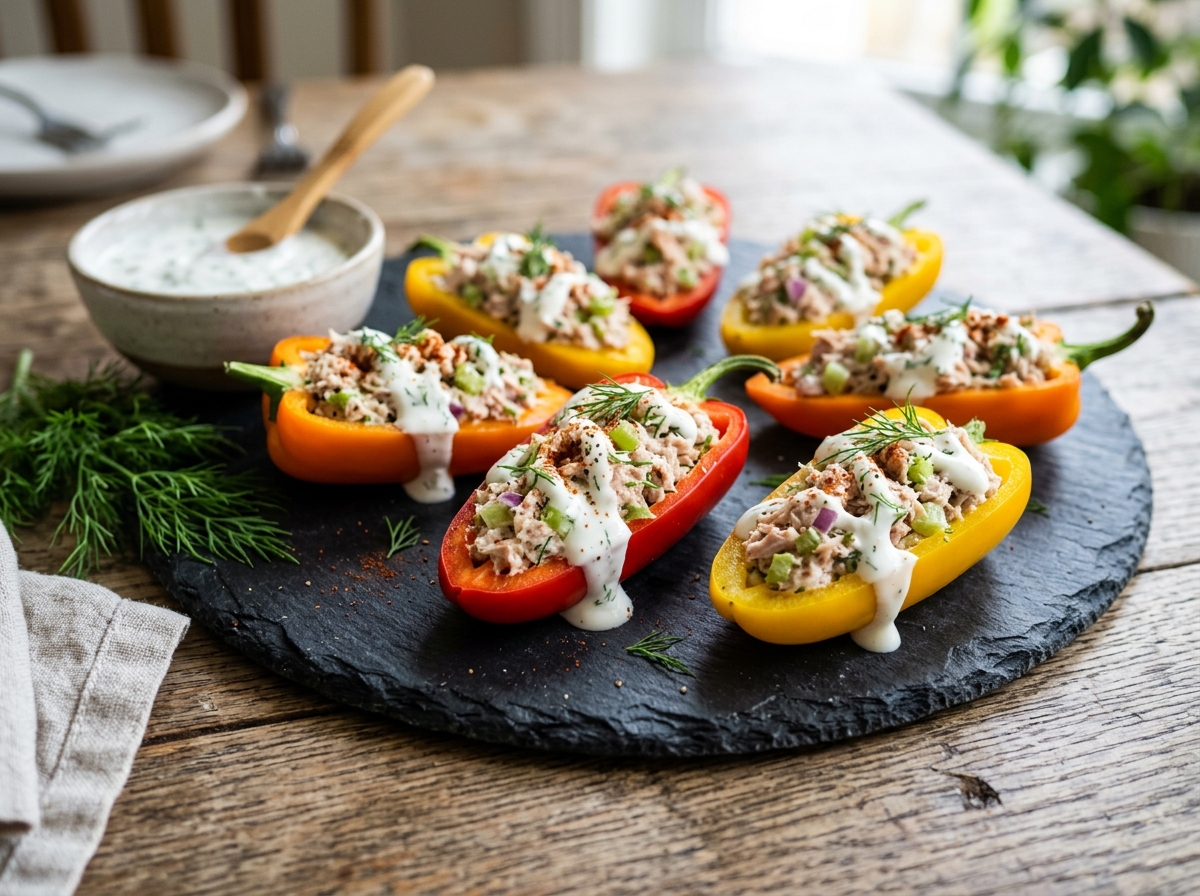
4. Tuna-Stuffed Pepper Boats With Yogurt Dill Dressing
About 30 grams of protein. 8 minutes. Keeps 3 days.
Swapping the bread for bell pepper halves cuts the calories substantially without touching the protein, and it travels better than a sandwich.
What you need
- 1 can (5 ounces) tuna in water, well-drained
- 1/4 cup plain nonfat Greek yogurt
- 1 tablespoon Dijon mustard
- 1 stalk celery, finely diced
- 2 tablespoons red onion, finely diced
- 1 tablespoon capers, roughly chopped
- 1 tablespoon fresh dill
- 1 large bell pepper, halved and seeded
- Salt and black pepper
How to make it
- Press the tuna against the side of the can with the lid to squeeze out as much water as possible. Watery tuna makes watery salad.
- Flake the tuna into a bowl and mix in the yogurt, Dijon, celery, onion, capers, and dill.
- Season with salt and plenty of black pepper, then taste and adjust.
- Spoon the mixture into the pepper halves just before eating, or pack the salad and the pepper separately.
Keep the filling and the pepper apart until serving, and this stays crisp all week.
High Protein Lunch Ideas For Work
These five are built for the realities of a workday, meaning they either reheat well in a shared microwave or eat perfectly cold at a desk, leaving more time to watch something during your lunch break. Four of the five batch-cook.
Imagine an office worker whose 12:30 meeting regularly runs long, leaving eleven minutes to eat. Anything requiring assembly at work is already a failed plan. Everything below arrives finished.
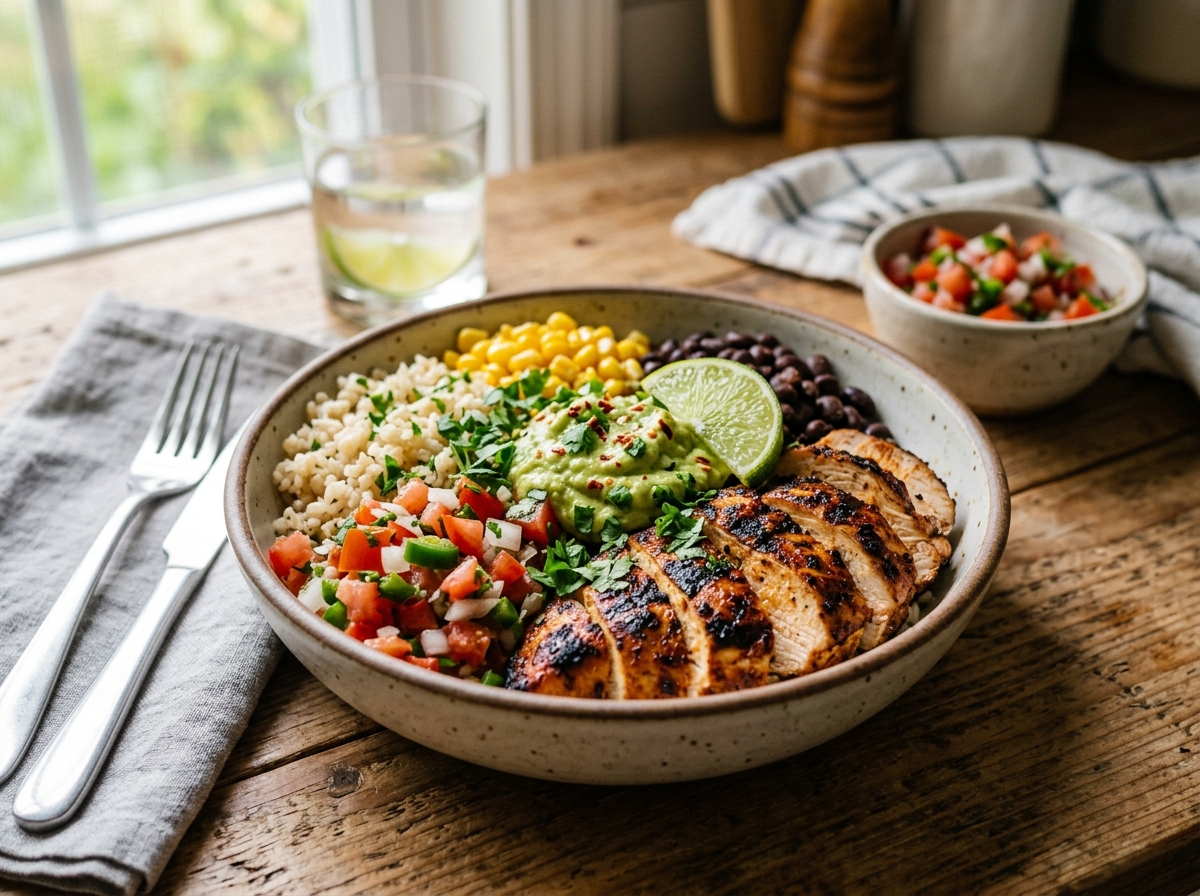
5. Chipotle Chicken Burrito Meal-Prep Bowl
About 42 grams of protein. 25 minutes for 4 servings. Keeps 4 days.
The workhorse of meal prep, and it genuinely improves by day two as the chicken absorbs the marinade.
What you need (makes 4)
- 1.5 pounds boneless, skinless chicken thighs or breasts
- 2 tablespoons chipotle in adobo, minced, plus 1 tablespoon of the sauce
- 1 tablespoon olive oil, 1 teaspoon cumin, 1 teaspoon smoked paprika
- 2 cups cooked brown rice
- 1 can (15 ounces) black beans, rinsed
- 1 cup corn kernels
- Juice of 2 limes, 1/2 cup chopped cilantro
- 1 cup pico de gallo or salsa
How to make it
- Toss the chicken with the chipotle, adobo sauce, olive oil, cumin, and paprika. Let it sit 10 minutes while the oven heats to 425°F (220°C).
- Roast on a sheet pan for 18 to 22 minutes, until the internal temperature reaches 165°F (74°C). Rest for 5 minutes, then chop.
- Stir the lime juice and cilantro through the warm rice. This is the step most people skip, and it is the difference between good and forgettable.
- Divide the rice between four containers, then add the beans, corn, and chicken in separate sections rather than mixed.
- Pack the salsa in a small side container and add it after reheating.
Sections rather than a mixed pile means each element reheats evenly and nothing turns to mush.
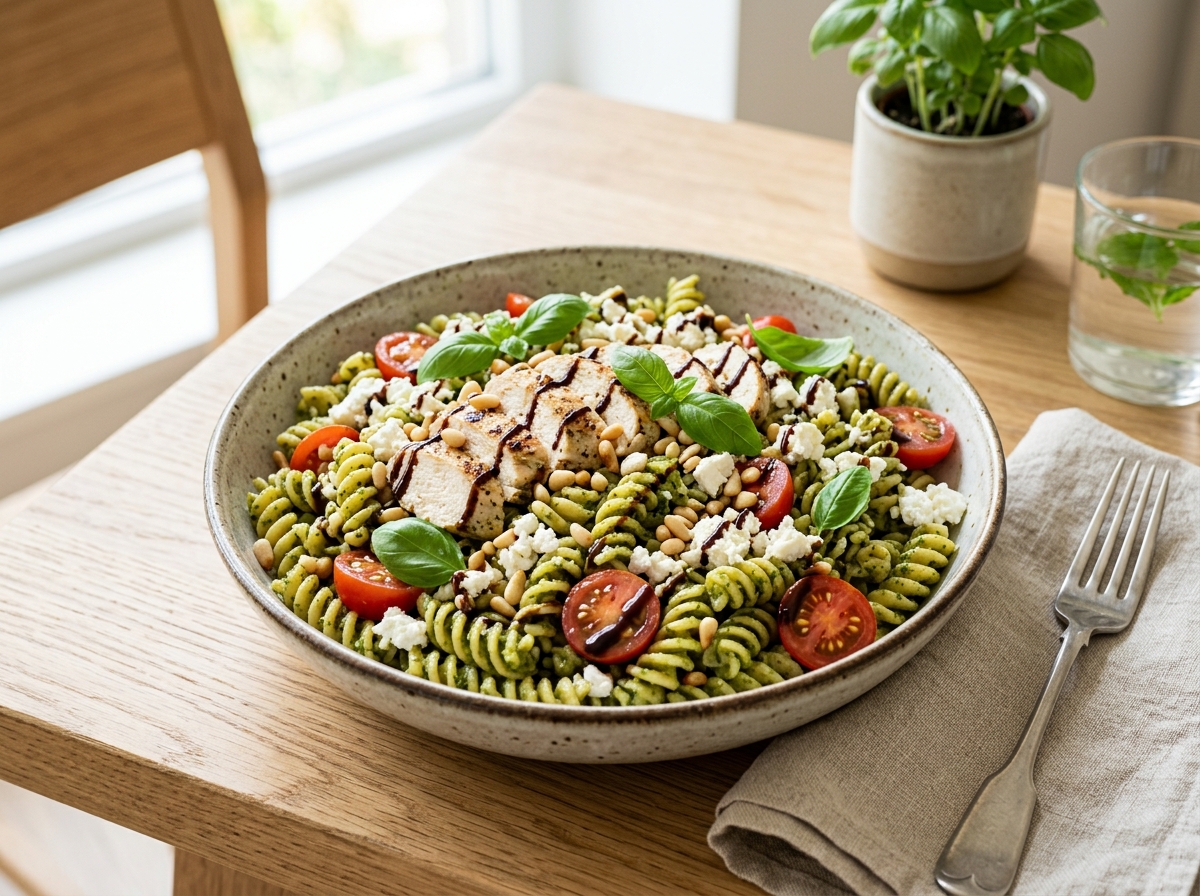
6. Pesto Protein Pasta Salad With Chicken And Feta
About 40 grams of protein. 15 minutes for 4 servings. Keeps 4 days.
Chickpea or lentil pasta adds roughly 7 to 12 grams of protein per serving over regular pasta, plus considerably more fiber.
What you need (makes 4)
- 8 ounces chickpea or red lentil pasta
- 12 ounces cooked chicken breast, sliced
- 1/3 cup basil pesto
- 1 cup cherry tomatoes, halved
- 1 cucumber, diced
- 3 ounces feta, crumbled
- 1/3 cup pitted olives, halved
- Juice of 1 lemon, olive oil, black pepper
How to make it
- Cook the pasta one minute short of the package time. Legume pastas go from firm to disintegrating fast, so start tasting early.
- Drain and rinse under cold running water for a full 30 seconds. This stops the cooking and strips the starch that makes cold pasta gluey.
- Toss the drained pasta with the pesto and lemon juice while it's still slightly damp, so the sauce spreads instead of clumping.
- Fold in the chicken, tomatoes, cucumber, feta, and olives. Season with black pepper.
- Divide into four containers. It tastes better on day two once the pasta has absorbed the lemon.
Hold back a tablespoon of pesto and stir it in on day three to refresh the flavor.
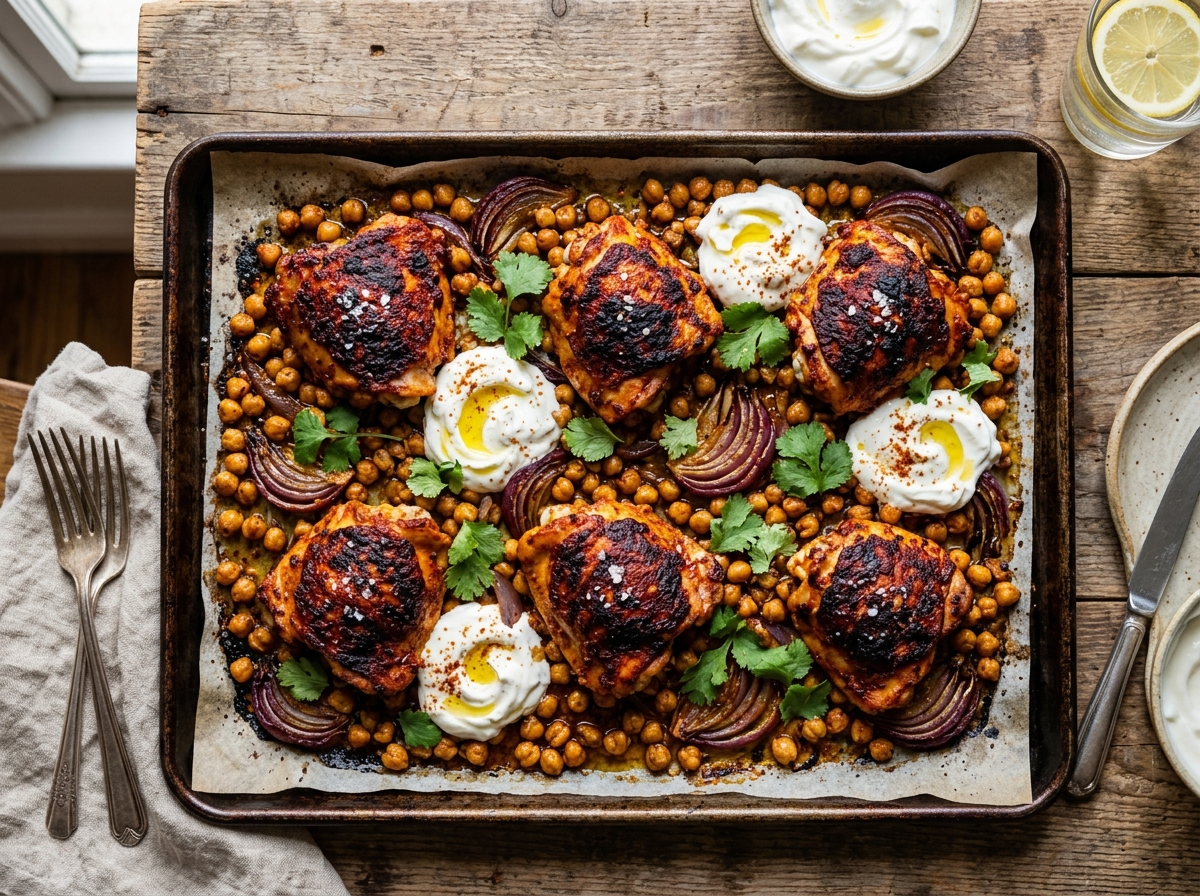
7. Sheet-Pan Harissa Chicken Thighs With Chickpeas
About 38 grams of protein. 35 minutes for 4 servings. Keeps 4 days.
One pan, one set of dishes, and the chickpeas crisp up in the chicken fat while everything roasts.
What you need (makes 4)
- 8 boneless, skinless chicken thighs, about 1.75 pounds
- 2 cans (15 ounces each) chickpeas, rinsed and dried
- 3 tablespoons harissa paste
- 2 tablespoons olive oil
- 1 lemon, sliced into rounds
- 1 red onion, cut into wedges
- 1 teaspoon cumin, salt
- Greek yogurt and parsley to serve
How to make it
- Heat the oven to 425°F (220°C). Dry the chickpeas thoroughly on a towel, since any moisture stops them from crisping.
- Toss the chickpeas and onion with 1 tablespoon of olive oil, the cumin, and salt, then spread them across a sheet pan.
- Rub the chicken thighs with the harissa and remaining oil. Nestle them among the chickpeas and lay the lemon slices on top.
- Roast for 28 to 32 minutes, until the chicken reaches 165°F (74°C) and the chickpeas have started to pop and brown.
- Cool completely before packing, and add a spoonful of yogurt and fresh parsley when you serve it.
Thighs are the right cut here because they stay juicy through reheating in a way breasts do not.
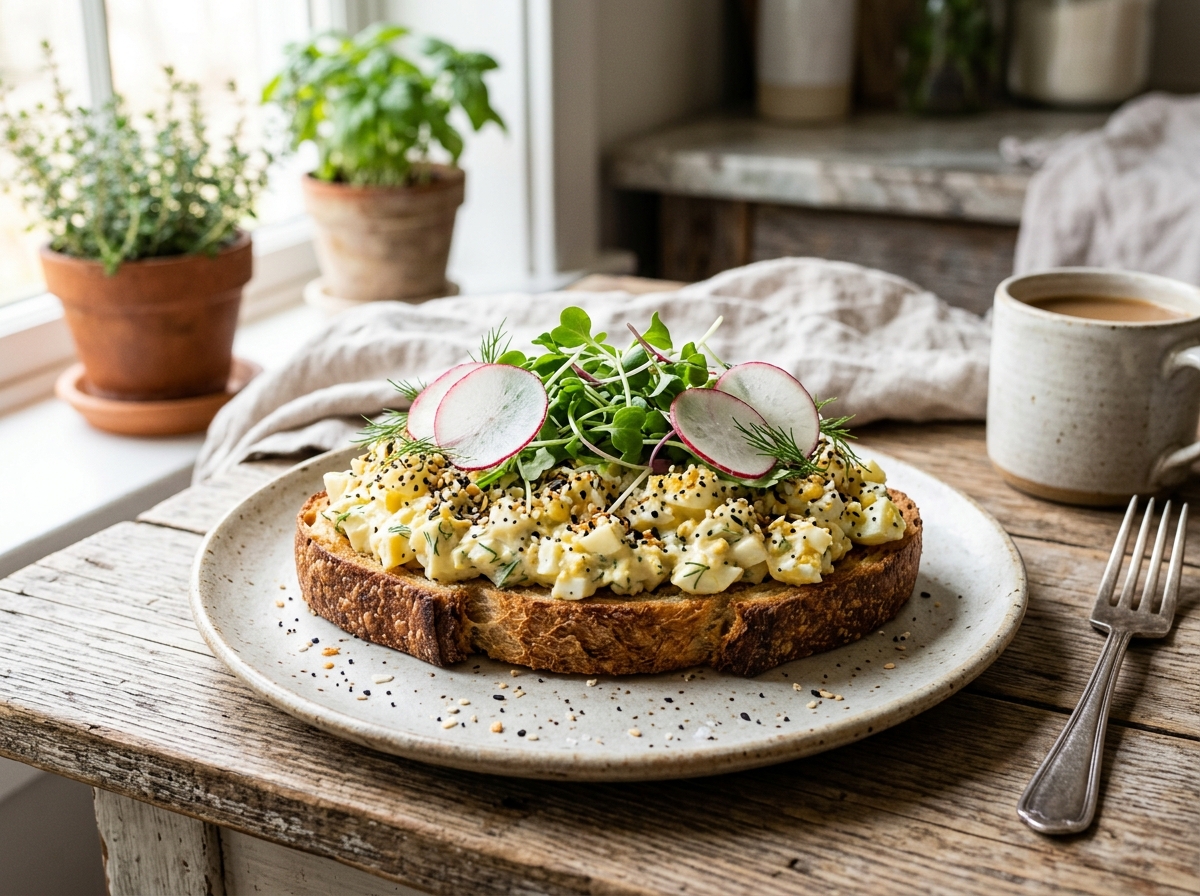
8. Everything-Seasoning Egg Salad On Sourdough
About 28 grams of protein. 20 minutes. Keeps 3 days as filling.
Swapping half the mayo for Greek yogurt adds protein without the gluey heaviness that ruins most egg salad.
What you need
- 3 large eggs
- 2 tablespoons plain Greek yogurt
- 1 tablespoon mayonnaise
- 1 teaspoon Dijon mustard
- 1 scallion, finely sliced
- 1 teaspoon everything bagel seasoning
- 2 slices sourdough or whole grain bread
- Butter, lettuce leaves, salt, black pepper
How to make it
- Bring half an inch of water to a boil in a saucepan, lower the eggs in on a spoon, cover, and steam for 11 minutes. Steaming beats boiling for easy peeling and no grey ring.
- Move the eggs straight into ice water for 5 minutes, then peel under running water.
- Chop the eggs roughly, leaving some larger pieces of white for texture, then fold in the yogurt, mayo, Dijon, scallion, and seasoning.
- Toast the bread, butter it thinly, and lay a lettuce leaf on each slice before adding the filling.
That butter-and-lettuce barrier is the only thing standing between you and a soggy sandwich by noon.
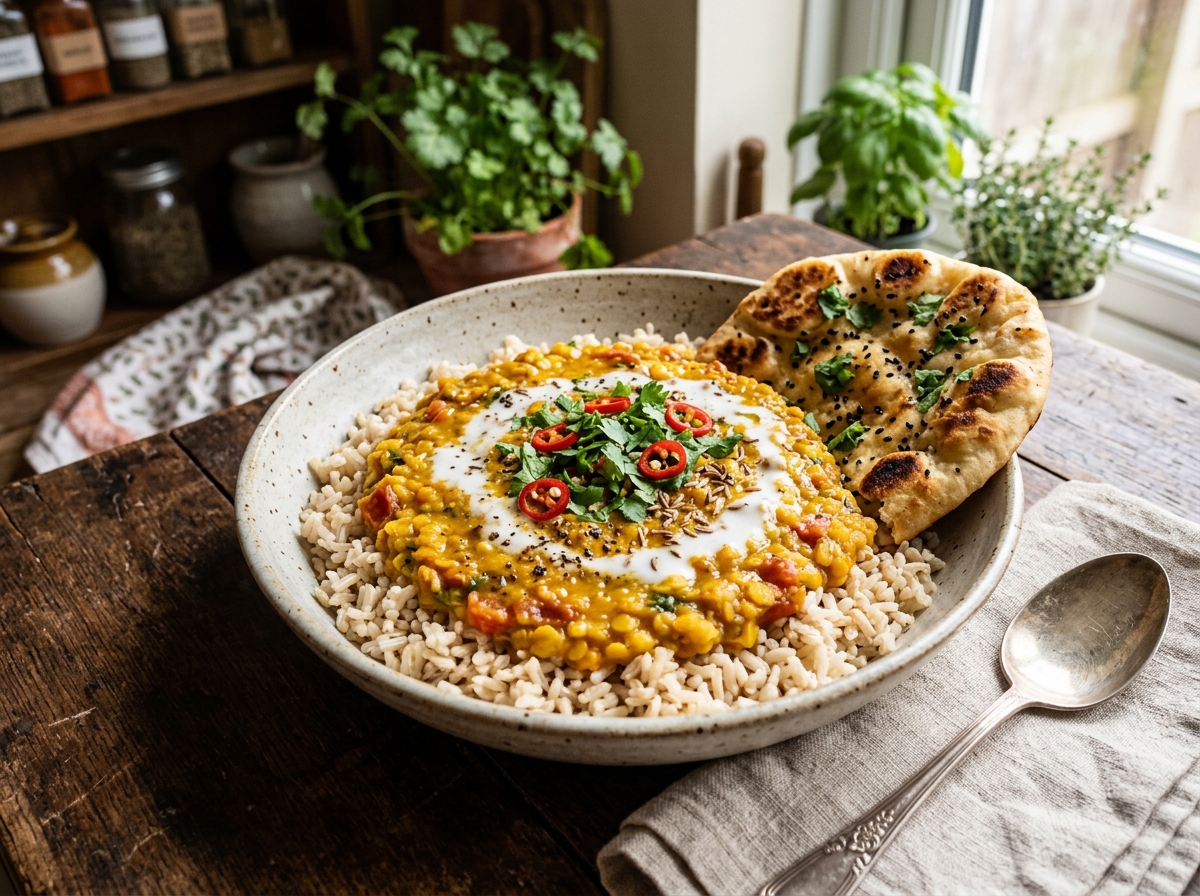
9. Everyday Red Lentil Dal With Brown Rice
About 23 grams of protein. 30 minutes for 4 servings. Keeps 5 days.
One of the cheapest lunches on this page, and one of the few that genuinely improves every day it sits in the fridge.
What you need (makes 4)
- 1.5 cups red lentils (masoor dal), rinsed until the water runs clear
- 4 cups water
- 1 teaspoon turmeric, 1 teaspoon salt
- 3 tablespoons ghee or oil
- 1 teaspoon cumin seeds
- 4 cloves garlic, sliced
- 1 small onion, diced
- 1 teaspoon garam masala, 1/2 teaspoon chili powder
- 4 cups cooked brown rice
- Greek yogurt and cilantro to serve
How to make it
- Put the lentils, water, turmeric, and salt in a pot. Bring to a boil, then lower to a simmer and cook uncovered for 20 minutes, skimming off any foam in the first few minutes.
- Stir occasionally until the lentils collapse into a loose porridge. Add water if it thickens past the consistency you want.
- While it simmers, heat the ghee in a small pan over medium. Add the cumin seeds and wait for them to sizzle and darken slightly, about 30 seconds.
- Add the onion and garlic and cook until golden, around 5 minutes, then stir in the garam masala and chili powder for a final 20 seconds.
- Pour the whole spiced mixture into the dal and stir. Serve over rice with a spoonful of yogurt, which pushes the protein to about 29 grams.
That final tempering step, the tadka, is not optional. It is where nearly all the flavor comes from.
Vegetarian High Protein Lunch Ideas
Here's the honest problem with most vegetarian lunch roundups. A black bean bowl that gets listed as "high protein" often lands around 10 to 15 grams, which is half of what the meal needs.
The fix is protein stacking: deliberately combining two moderate sources rather than relying on one. Tofu plus edamame. Chickpeas plus Greek yogurt. Paneer plus raita. Each of the four below clears 26 grams because of that combination, and each one names both sources so you can see the math.
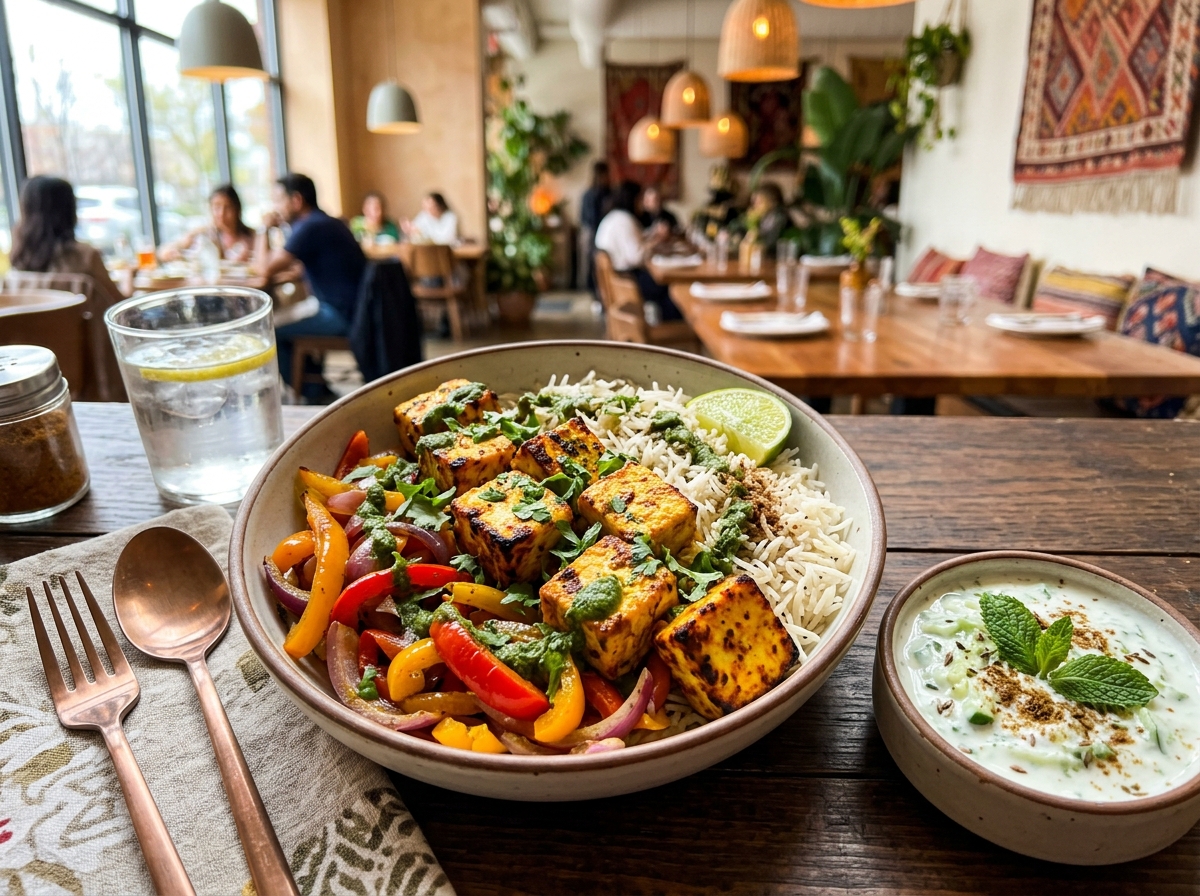
10. Paneer Tikka Bowl With Cucumber Raita
About 33 grams of protein. 25 minutes. Keeps 3 days.
Paneer is one of the densest vegetarian proteins available and, unlike most cheese, it holds its shape under high heat.
What you need
- 4 ounces paneer, cut into 1-inch cubes
- 1/4 cup plain Greek yogurt for the marinade
- 1 teaspoon each of garam masala, ground coriander, paprika
- 1/2 teaspoon turmeric, 1 teaspoon grated ginger, 1 clove garlic, grated
- 1 tablespoon oil, juice of half a lemon
- 1/2 bell pepper and 1/2 red onion, cut into chunks
- 1/2 cup cooked basmati rice
- For the raita, 1/2 cup Greek yogurt, 1/3 cucumber grated, pinch of cumin and salt
How to make it
- Mix the marinade yogurt with all the spices, ginger, garlic, oil, and lemon juice into a thick paste.
- Fold in the paneer, pepper, and onion until everything is coated. Fifteen minutes is enough marinating time, and the paneer won't absorb much more than that.
- Heat a skillet over medium-high heat and cook the paneer and vegetables for 6 to 8 minutes, turning occasionally, until charred in patches. Resist stirring constantly or nothing browns.
- Squeeze the grated cucumber in your hand over the sink to remove the water, then stir it into the raita yogurt with cumin and salt.
- Serve over rice with the raita alongside.
Squeezing the cucumber is what keeps the raita thick instead of watery by lunchtime.
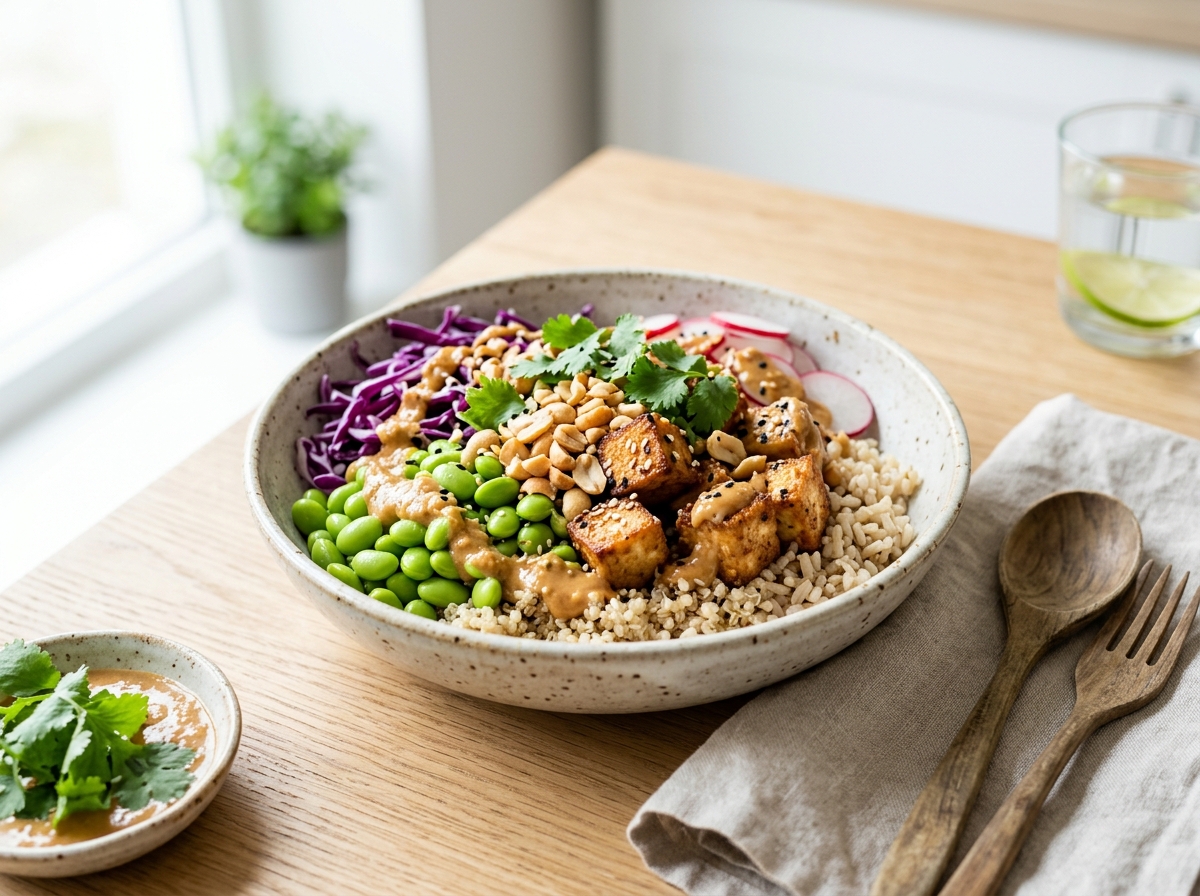
11. Crispy Baked Tofu And Edamame Bowl With Peanut-Ginger Sauce
About 32 grams of protein. 40 minutes. Keeps 4 days.
Tofu at 15 grams is not enough on its own. Edamame at 9 grams and the peanut sauce at 4 grams close the gap.
What you need
- 6 ounces extra-firm tofu, pressed and cubed
- 1 tablespoon cornstarch, 1 tablespoon soy sauce, 1 teaspoon oil
- 1/2 cup frozen shelled edamame
- 1/2 cup cooked quinoa
- 1 cup shredded carrot and red cabbage
- For the sauce, 2 tablespoons peanut butter, 1 tablespoon soy sauce, 1 teaspoon grated ginger, 1 teaspoon rice vinegar, 1 teaspoon honey, warm water to loosen
How to make it
- Press the tofu for at least 15 minutes under something heavy, wrapped in a clean towel. Skipping this guarantees soft tofu.
- Heat the oven to 400°F (200°C). Toss the cubes with soy sauce first, then with the cornstarch and oil, in that order. Reversing it makes a paste.
- Spread the cubes out on parchment with space between them and bake for 25 to 30 minutes, flipping once, until the edges are firm and golden.
- Boil the edamame for 3 minutes and drain.
- Whisk the sauce ingredients, adding warm water a teaspoon at a time until it pours. Layer the quinoa, vegetables, edamame, and tofu, and pack the sauce separately.
The cornstarch coating is the whole trick. Without it, baked tofu is just warm tofu.
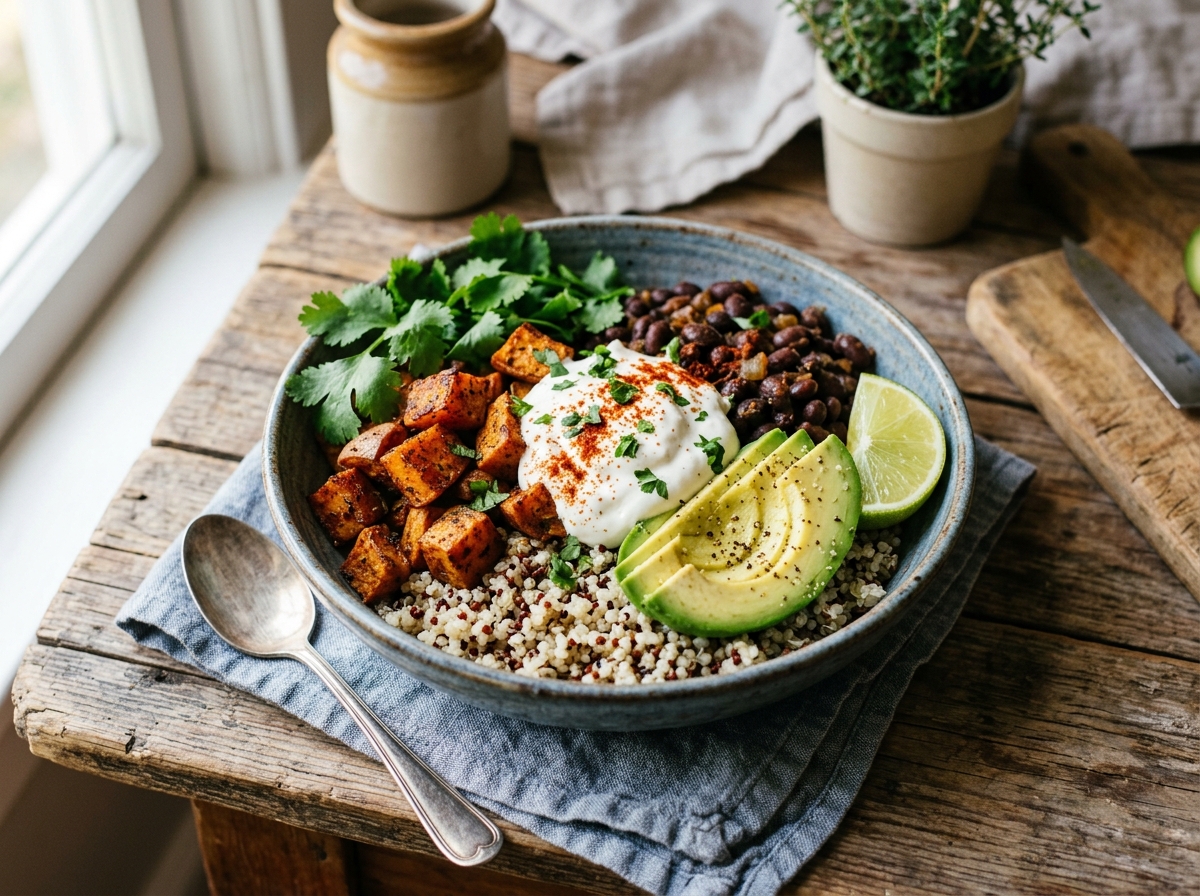
12. Smoky Black Bean And Sweet Potato Bowl With Cottage Cheese Crema
About 27 grams of protein. 30 minutes. Keeps 4 days.
Blended cottage cheese stands in for sour cream and takes the meal from around 15 grams of protein to 27.
What you need
- 1 medium sweet potato, cubed
- 1 cup canned black beans, rinsed
- 1 teaspoon smoked paprika, 1/2 teaspoon cumin, 1 tablespoon olive oil
- 1/2 cup low-fat cottage cheese
- Juice of half a lime, pinch of salt
- 1 cup shredded cabbage, 2 tablespoons pickled red onion, cilantro
How to make it
- Heat the oven to 425°F (220°C). Toss the sweet potato cubes with the oil, paprika, cumin, and salt.
- Roast for 22 to 25 minutes, turning halfway, until the edges caramelize.
- In the last 5 minutes, add the black beans to the same tray so they warm through and dry out slightly.
- Blend the cottage cheese with the lime juice and a pinch of salt until completely smooth, adding a splash of water if needed.
- Build the bowl with cabbage at the base, then the sweet potato and beans, then the crema, pickled onion, and cilantro.
Blend the crema in a batch on Sunday, since it keeps five days and upgrades almost anything.
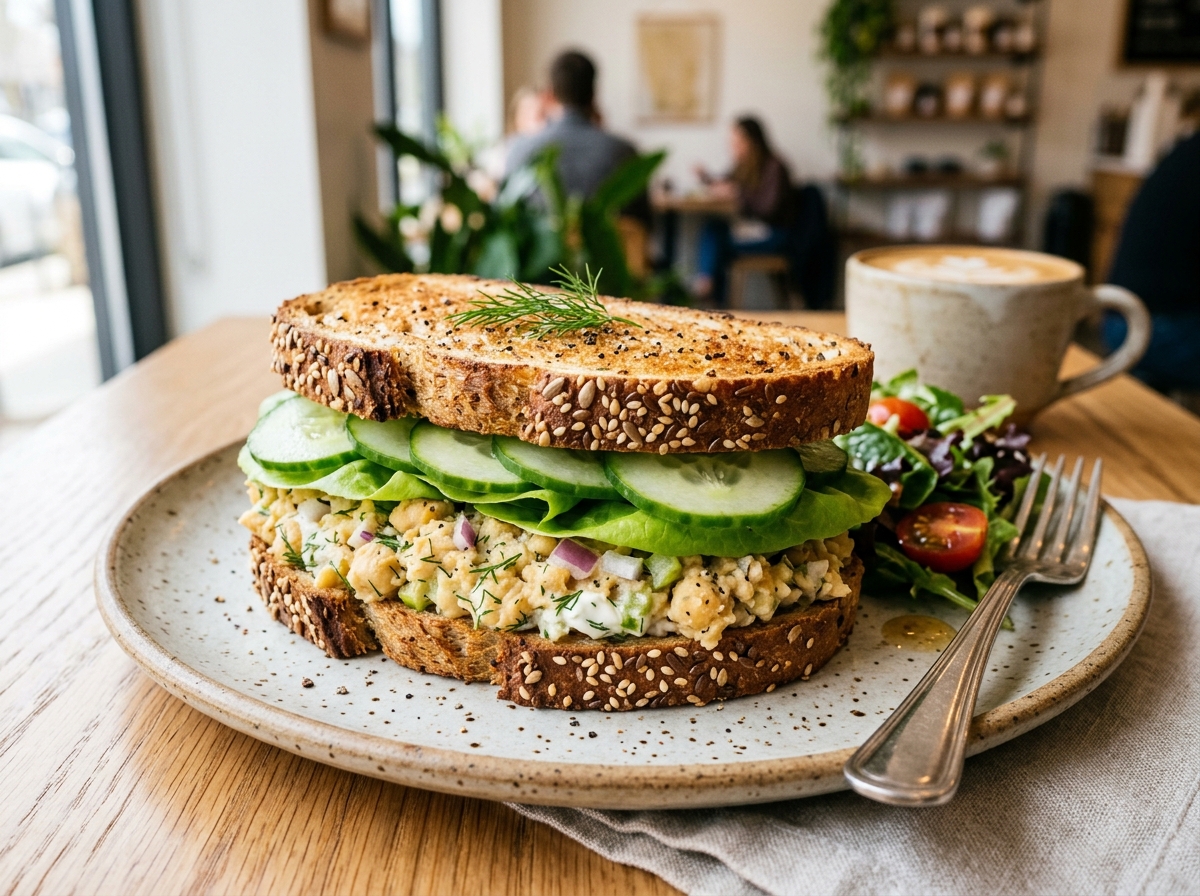
13. Chickpea Smash Sandwich With Greek Yogurt And Dill
About 26 grams of protein. 10 minutes. Keeps 3 days as filling.
The vegetarian answer to egg salad, and the one recipe here that costs under two dollars a serving.
What you need
- 1 cup canned chickpeas, rinsed and drained
- 1/4 cup plain Greek yogurt
- 1 teaspoon Dijon mustard
- 1 stalk celery, finely diced
- 2 tablespoons red onion, finely diced
- 1 tablespoon fresh dill, juice of half a lemon
- 2 slices whole grain bread, lettuce, salt, black pepper
How to make it
- Tip the chickpeas into a bowl and mash with a fork until roughly half are broken down. Leaving some whole is what gives it texture instead of hummus.
- Stir in the yogurt, Dijon, lemon juice, celery, onion, and dill.
- Season aggressively with salt and black pepper. Chickpeas are bland and need more seasoning than you think.
- Toast the bread, add lettuce as a moisture barrier, then the filling.
Make the filling on Sunday, and it gets better as the chickpeas absorb the lemon and dill.
High Protein Lunch Ideas For School
Two constraints govern a lunchbox. It has to be something a child will actually eat, and it has to comply with whatever the school allows.
On allergens, most schools restrict peanuts and tree nuts, and the FDA now recognizes nine major food allergens, including sesame. A few practical swaps cover almost every situation.
- Replace peanut butter with sunflower seed butter, which spreads and tastes close enough that most kids do not notice.
- Replace cheese and yogurt with soy or pea-protein versions for dairy-free lunches, checking the label since protein varies widely by brand.
- Skip everything bagel seasoning in school lunches, since it contains sesame.
- Always check your specific school's policy, since restrictions vary by district and sometimes by classroom.
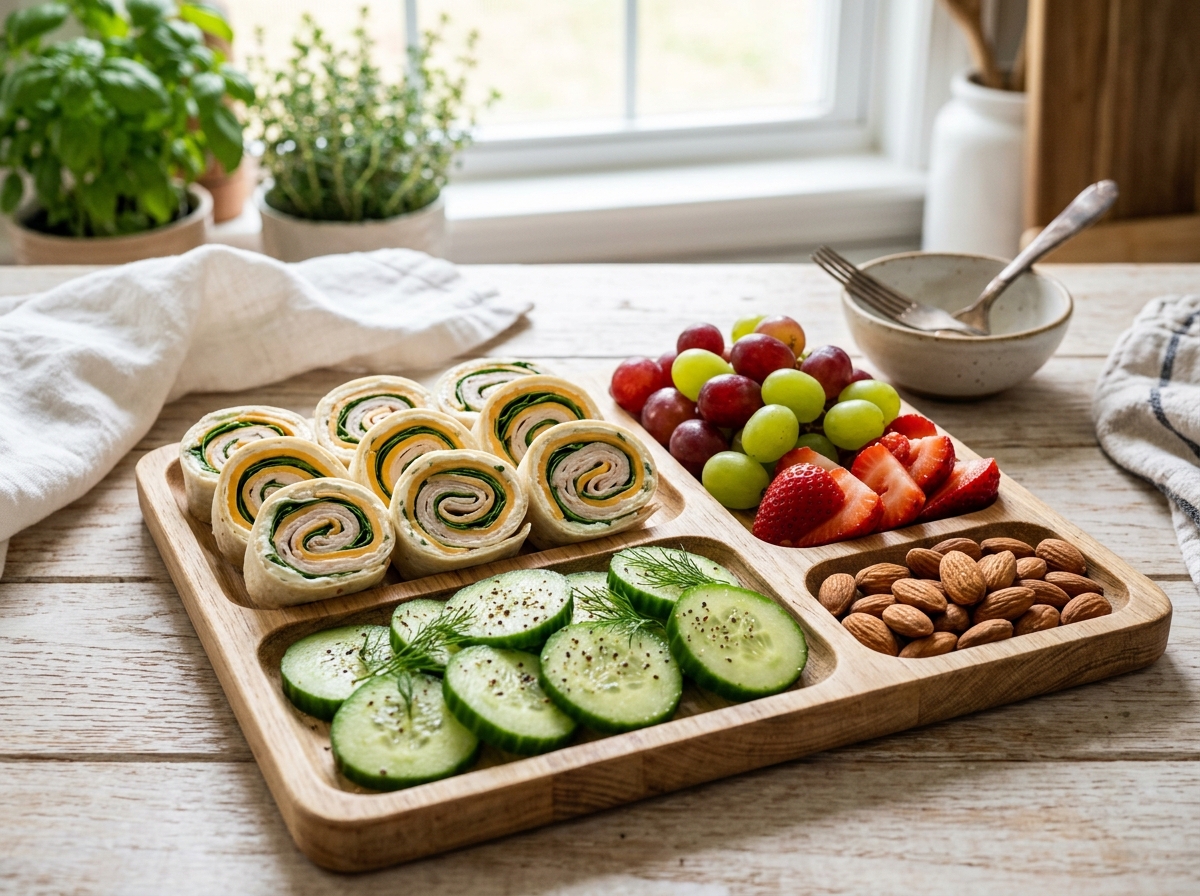
14. Turkey And Cheddar Pinwheels With A Bento Side Board
About 26 grams of protein. 8 minutes. Keeps 2 days.
Pinwheels solve the acceptance problem, because sliced rounds read as fun in a way a sandwich never does.
What you need
- 1 large whole wheat tortilla
- 3 ounces sliced deli turkey
- 1 ounce cheddar, thinly sliced or shredded
- 1 tablespoon cream cheese
- A few baby spinach leaves
- For the side board, 1/4 cup hummus, cucumber sticks, grapes, whole grain crackers
How to make it
- Spread the cream cheese right to the edges of the tortilla. It works as glue and stops the roll unravelling.
- Layer the turkey, then the cheddar, then the spinach, keeping everything in a single flat layer.
- Roll it as tightly as you can without tearing, then wrap the log in plastic and chill for 15 minutes.
- Trim the ends and slice into six rounds with a sharp knife, wiping the blade between cuts.
- Pack the rounds cut-side up alongside the hummus, cucumber, grapes, and crackers.
Chilling before slicing is the difference between neat spirals and a collapsed mess.
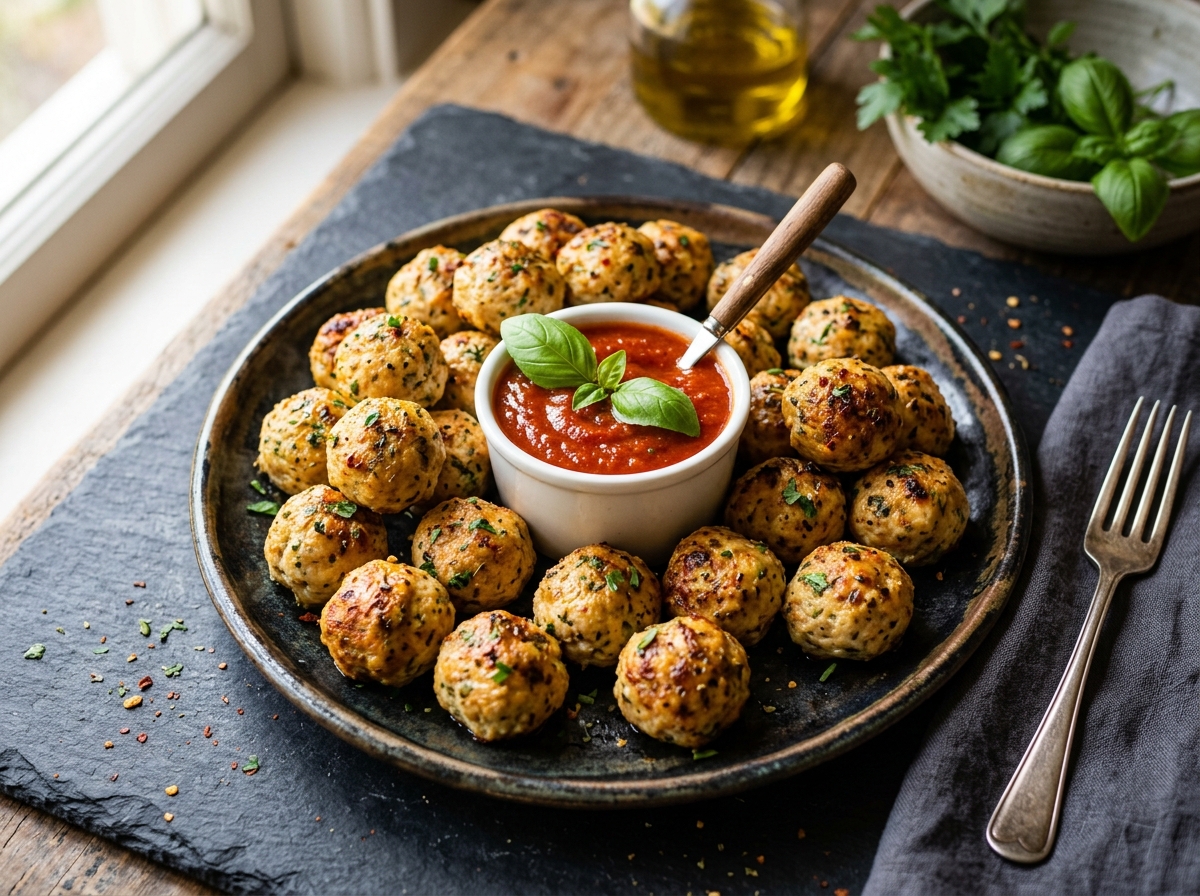
15. Baked Chicken Meatballs With Marinara Dipping Cup
About 28 grams of protein. 30 minutes for 16 meatballs. Keeps 4 days, freezes 3 months.
Anything dippable gets eaten. These freeze well, so one batch covers several weeks of lunches.
What you need (makes 16)
- 1 pound ground chicken
- 1/3 cup breadcrumbs, 1/4 cup grated Parmesan
- 1 egg, 2 cloves garlic minced, 1 teaspoon dried oregano
- 1/2 teaspoon salt, black pepper
- 2 tablespoons milk
- Marinara sauce for dipping
How to make it
- Heat the oven to 400°F (200°C) and line a sheet pan with parchment.
- Soak the breadcrumbs in the milk for 2 minutes before mixing. This keeps lean ground chicken from drying out.
- Combine everything by hand, mixing just until it comes together. Overworking makes meatballs dense and rubbery.
- Roll into 16 balls roughly the size of a golf ball and space them out on the pan.
- Bake 18 to 20 minutes, until they reach 165°F (74°C). Cool completely before packing five per lunch with marinara in a small lidded cup.
Freeze on the tray first, then bag, so they don't fuse into a single block.
Don't Miss: Natural Energy-Boosting Foods For All-Day Vitality
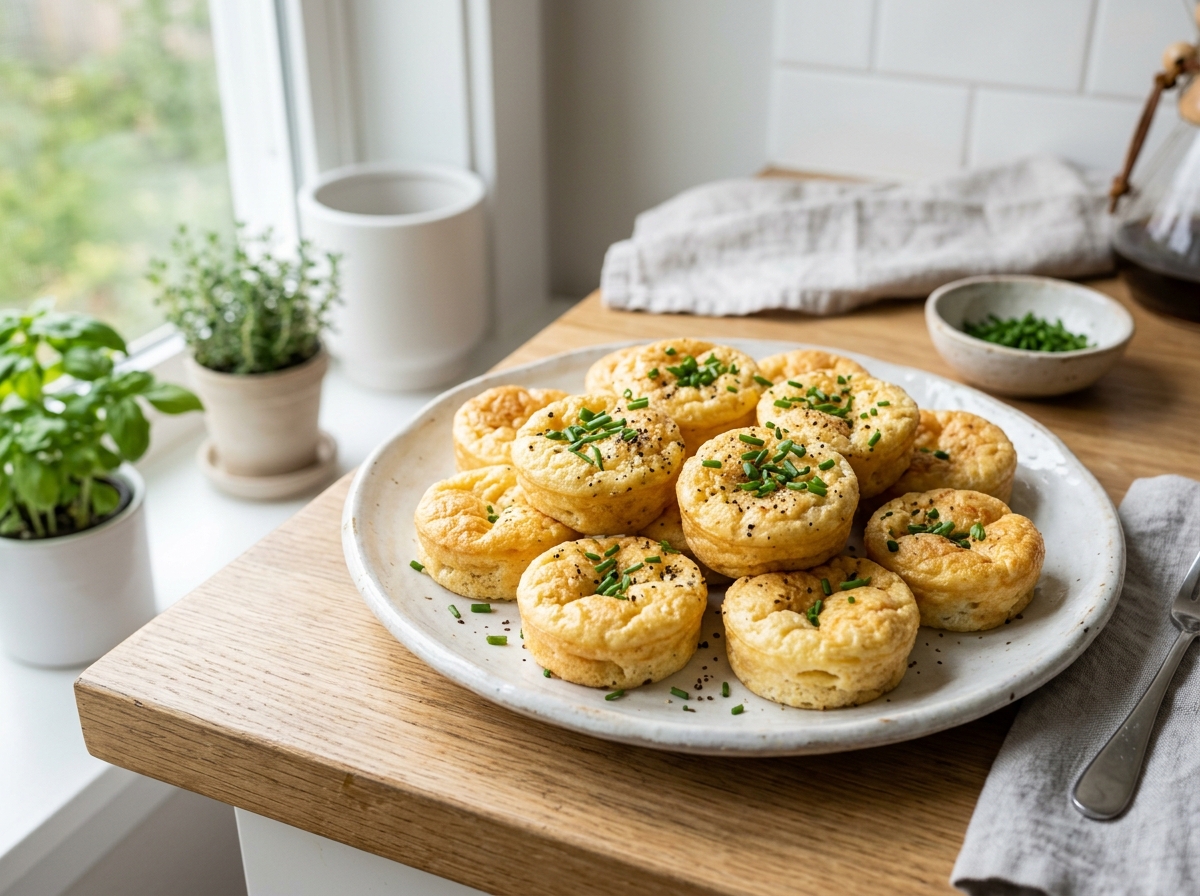
16. Cottage Cheese Egg Bites
About 22 grams of protein for three. 35 minutes for 12 bites. Keeps for 4 days.
The cottage cheese is doing double duty, adding protein and keeping the texture custardy rather than rubbery.
What you need (makes 12)
- 8 large eggs
- 1 cup cottage cheese
- 1 cup shredded cheddar
- 1/2 cup finely diced bell pepper
- 1/2 cup chopped spinach, squeezed dry
- 1/2 teaspoon salt, black pepper
How to make it
- Preheat the oven to 350°F (175°C) and generously grease a 12-cup muffin tin, including the top surface.
- Blend the eggs and cottage cheese together for 20 seconds, until completely smooth. Unblended cottage cheese leaves visible curds.
- Stir in the cheddar, pepper, spinach, salt, and pepper by hand.
- Fill each cup about three-quarters full and bake for 22 to 25 minutes, until the centers are just set and barely jiggle.
- Let them cool in the tin for 10 minutes, then run a knife around each one.
They deflate as they cool, which is normal and does not affect anything except appearance.
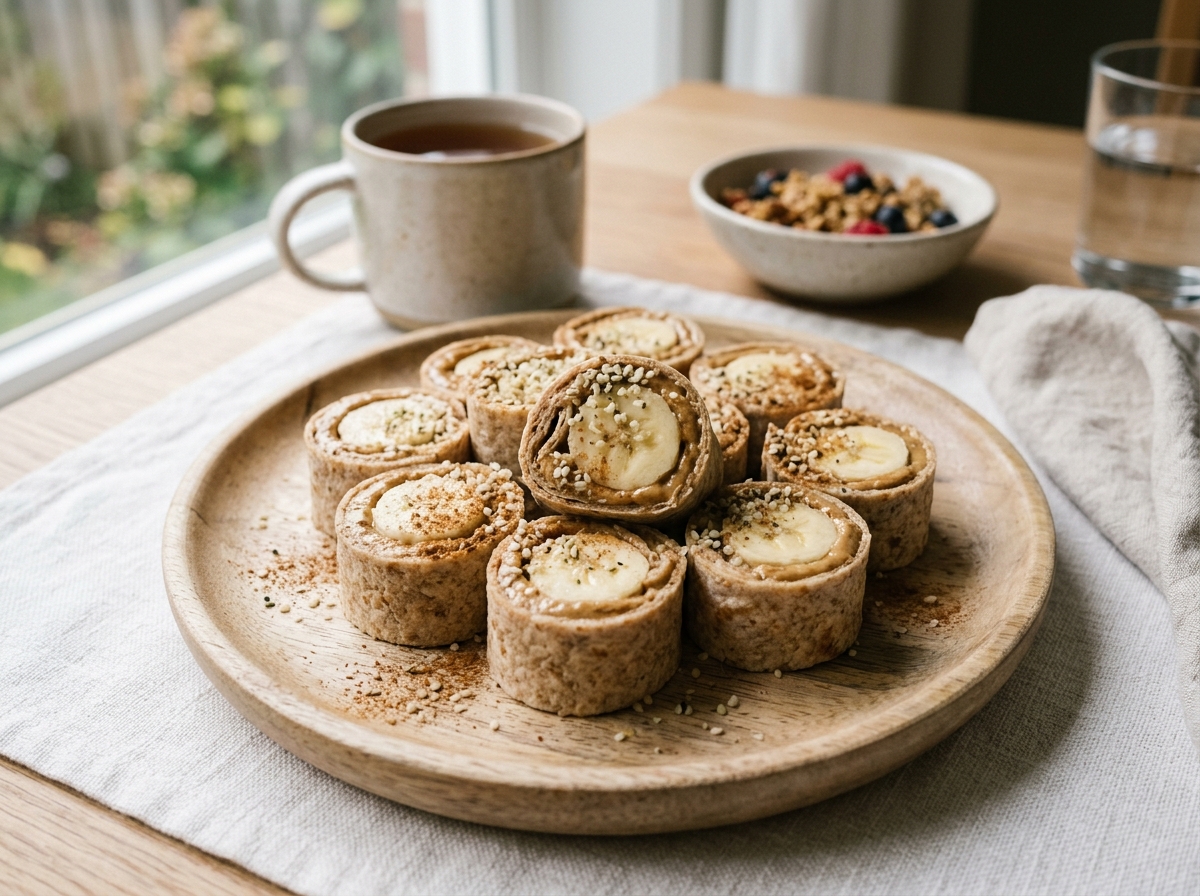
17. Nut-Free Sunflower Butter And Banana Protein Roll-Up
About 20 grams of protein with the yogurt cup. 5 minutes. Keeps 1 day.
The reliable fallback for a rushed morning, built entirely from shelf-stable ingredients plus one banana.
What you need
- 1 high-protein tortilla, around 10 to 12 grams of protein
- 2 tablespoons sunflower seed butter
- 1 banana
- 1 teaspoon chia seeds, pinch of cinnamon
- 1 individual Greek yogurt cup for the side
How to make it
- Warm the tortilla for 10 seconds in a dry pan or microwave so it rolls without cracking.
- Spread the sunflower butter across it, leaving a half-inch border at one end.
- Sprinkle the chia seeds and cinnamon over the butter, then lay the whole banana across one edge.
- Roll tightly toward the clean edge to seal it, then slice into thirds on a diagonal.
- Pack with the yogurt cup, which contributes most of the protein.
Choose a high-protein tortilla, and this goes from a 9-gram snack to a 20-gram lunch with zero extra effort.
High-Protein Lunch Ideas On The Go
All four need no microwave, no fridge at the destination, and no assembly beyond opening a lid, making them useful for people who spend long stretches away from home. They are for shift workers, drivers, students between classes, and anyone eating standing up.
Picture a nurse on a twelve-hour shift with a locker instead of a break room. Reheating isn't an option, so the meal has to be designed cold from the start, not as a hot meal that has gone cold.
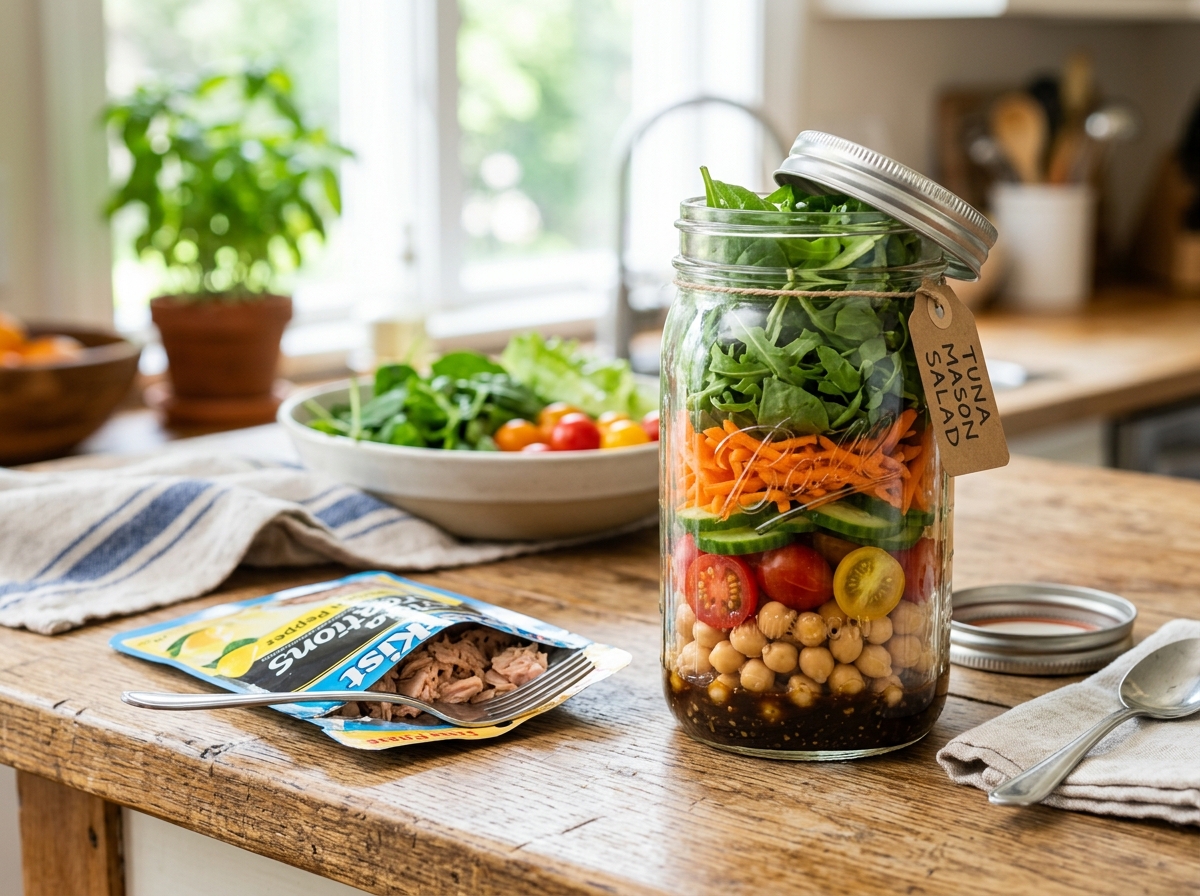
18. Tuna Pouch Mason Jar Salad
About 31 grams of protein. 8 minutes. Keeps 4 days.
The layering order is the entire technique. Done right, the greens on top never touch the dressing at the bottom.
What you need
- 1 pouch (about 4 ounces) tuna
- 1/2 cup chickpeas, rinsed
- 1 ounce feta, crumbled
- 1/2 cucumber, diced; 8 cherry tomatoes, halved; 2 tablespoons red onion
- 2 cups romaine or spinach
- 2 tablespoons olive oil, 1 tablespoon red wine vinegar, 1 teaspoon Dijon, oregano
How to make it
- Whisk the oil, vinegar, Dijon, and oregano, then pour into the bottom of a wide-mouth quart jar.
- Add the hardest ingredients next, so chickpeas, then onion, then cucumber and tomatoes. These can sit in the dressing for days without suffering.
- Add the tuna and feta in the middle layer.
- Pack the greens loosely on top, filling the jar to the lid so they stay above the moisture line.
- Seal and store upright. Invert and shake for 10 seconds right before eating, then eat straight from the jar.
Storing it upright is not optional. Lay it on its side, and the dressing reaches the greens.
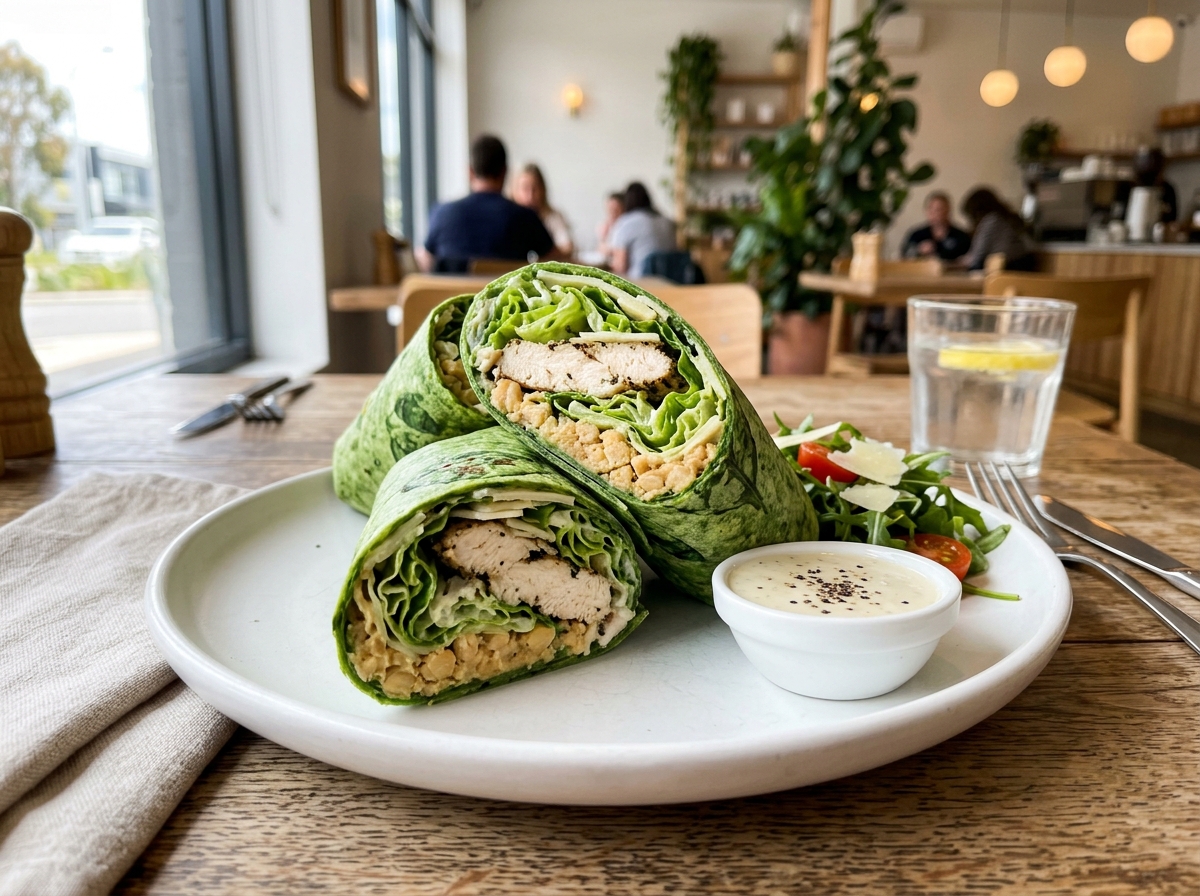
19. Chicken Caesar Wrap With Mashed Chickpeas
About 32 grams of protein. 10 minutes. Keeps 2 days.
Mashed chickpeas replace most of the dressing, adding protein and fiber while keeping the wrap from going soggy.
What you need
- 1 large whole wheat tortilla
- 3 ounces cooked chicken, sliced
- 1/3 cup chickpeas
- 2 tablespoons Caesar dressing
- 1 teaspoon lemon juice
- 1.5 cups chopped romaine
- 1 tablespoon grated Parmesan, black pepper
How to make it
- Mash the chickpeas with 1 tablespoon of the Caesar dressing and the lemon juice until spreadable but still textured.
- Spread the chickpea mixture over the tortilla to the edges.
- Toss the romaine with the remaining dressing and Parmesan in a separate bowl, then pile it in a line down the center.
- Add the chicken on top of the lettuce, not underneath, so the warm protein never sits against the wrap.
- Fold in the sides, roll tightly, and wrap in parchment. Slice in half through the paper.
Wrapping in parchment rather than foil keeps it from sweating, which is what makes wraps go limp.
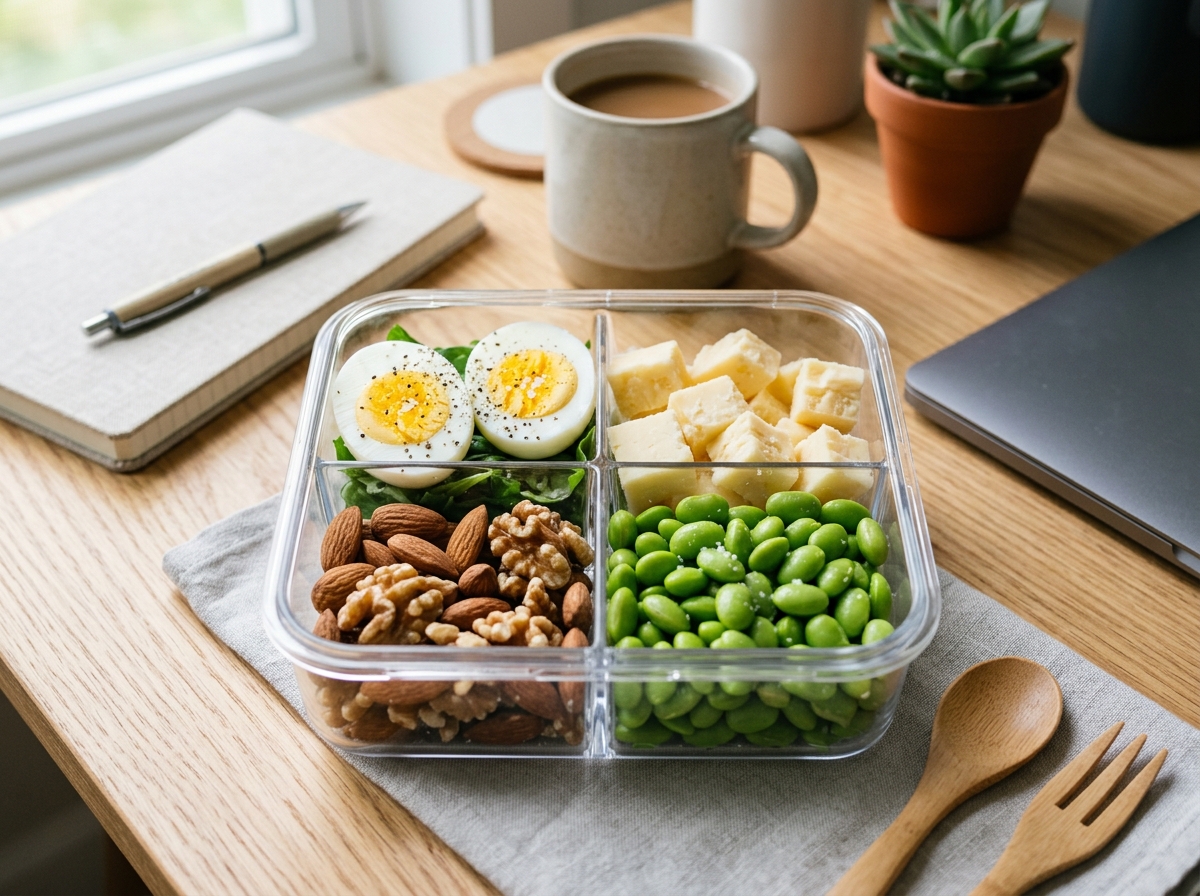
20. Build-Your-Own High-Protein Snack Box
About 40 grams of protein. 5 minutes. Keeps 3 days.
Not every lunch needs to be a plated meal. A grazing box hits the target easily and requires no cooking.
What you need
- 2 hard-boiled eggs
- 1 ounce sharp cheddar, cubed
- 1 ounce beef or turkey jerky
- 1/2 cup cottage cheese in a small lidded pot
- Whole grain crackers
- Grapes or apple slices, cherry tomatoes, a few olives
How to make it
- Steam a batch of eggs on Sunday using the 11-minute method from the egg salad recipe and leave them unpeeled in the fridge.
- Cube the cheddar in advance and keep it in a sealed container so morning assembly takes two minutes.
- Load a divided bento box with the eggs, cheese, and jerky in the protein section.
- Fill the remaining compartments with crackers, fruit, and vegetables.
- Add the cottage cheese pot last, and pack a small spoon.
The four protein sourcesare what push this past 40 grams. Drop any two, and it becomes a snack.
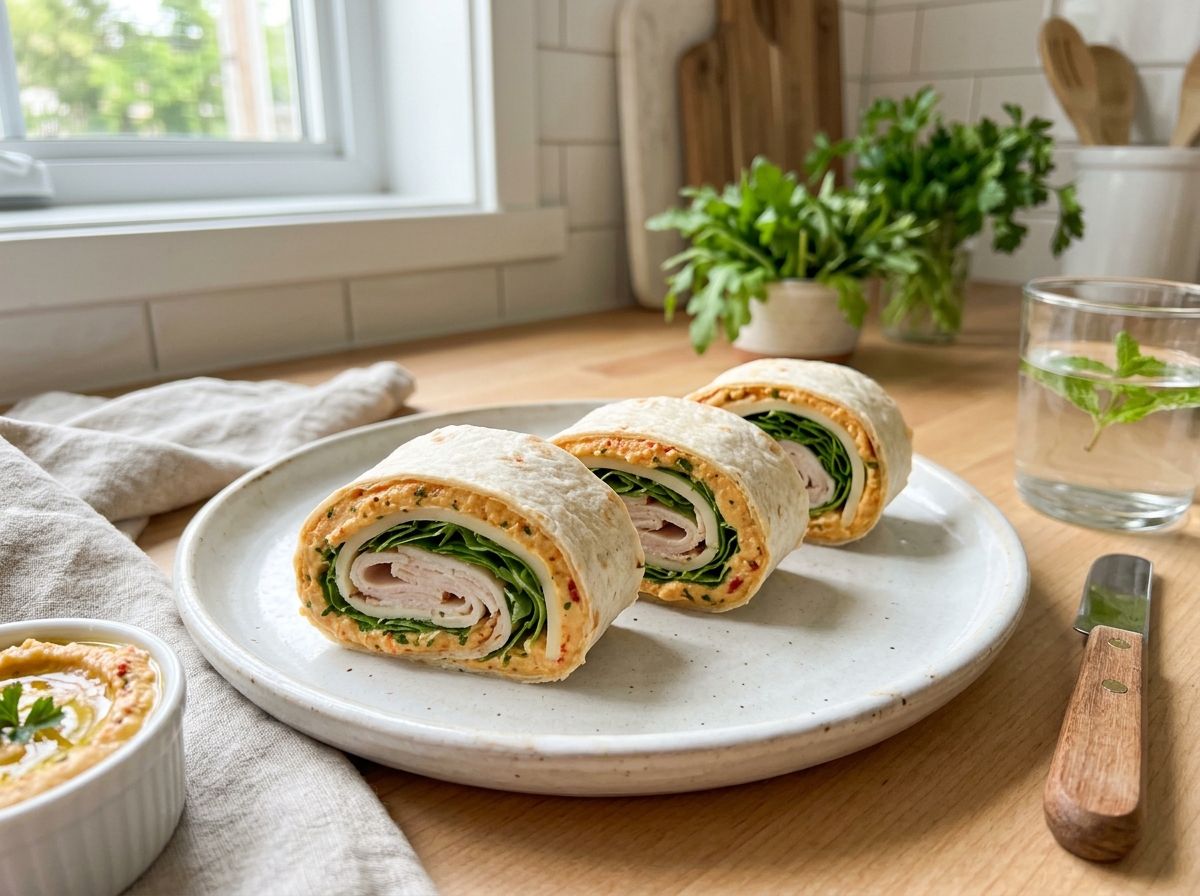
21. Turkey, Hummus, And Provolone Lavash Roll
About 32 grams of protein. 6 minutes. Keeps 2 days.
Lavash is thinner and more flexible than a tortilla, which means it rolls tighter and holds more filling without splitting.
What you need
- 1 sheet lavash bread
- 4 ounces sliced deli turkey
- 1 ounce provolone
- 2 tablespoons hummus
- Roasted red peppers, a handful of arugula
- Black pepper, a splash of red wine vinegar
How to make it
- Spread the hummus evenly across the lavash, leaving a clean strip at the far edge to seal the roll.
- Layer the turkey and provolone flat across the surface, overlapping slightly.
- Pat the roasted peppers dry before adding them. Any liquid they carry will soak through by lunchtime.
- Dress the arugula with vinegar and black pepper and lay it in a line, then roll tightly away from you.
- Wrap in parchment and chill for at least 20 minutes before slicing so it holds together.
Patting the peppers dry is a five-second step that saves the whole roll.
High Protein Lunch Ideas For Muscle Gain
These four are built for a 40-gram-plus target, and unlike the weight-loss section, they deliberately include calories. Gaining muscle requires energy alongside protein, so the rice and oil here do real work.
Think of someone training four days a week who keeps falling short on daily protein and tries to fix it with a 9 pm shake. Front-loading 45 grams at lunch solves that problem far more comfortably, and it fits the ISSN's advice to spread protein across the day rather than back-loading it.
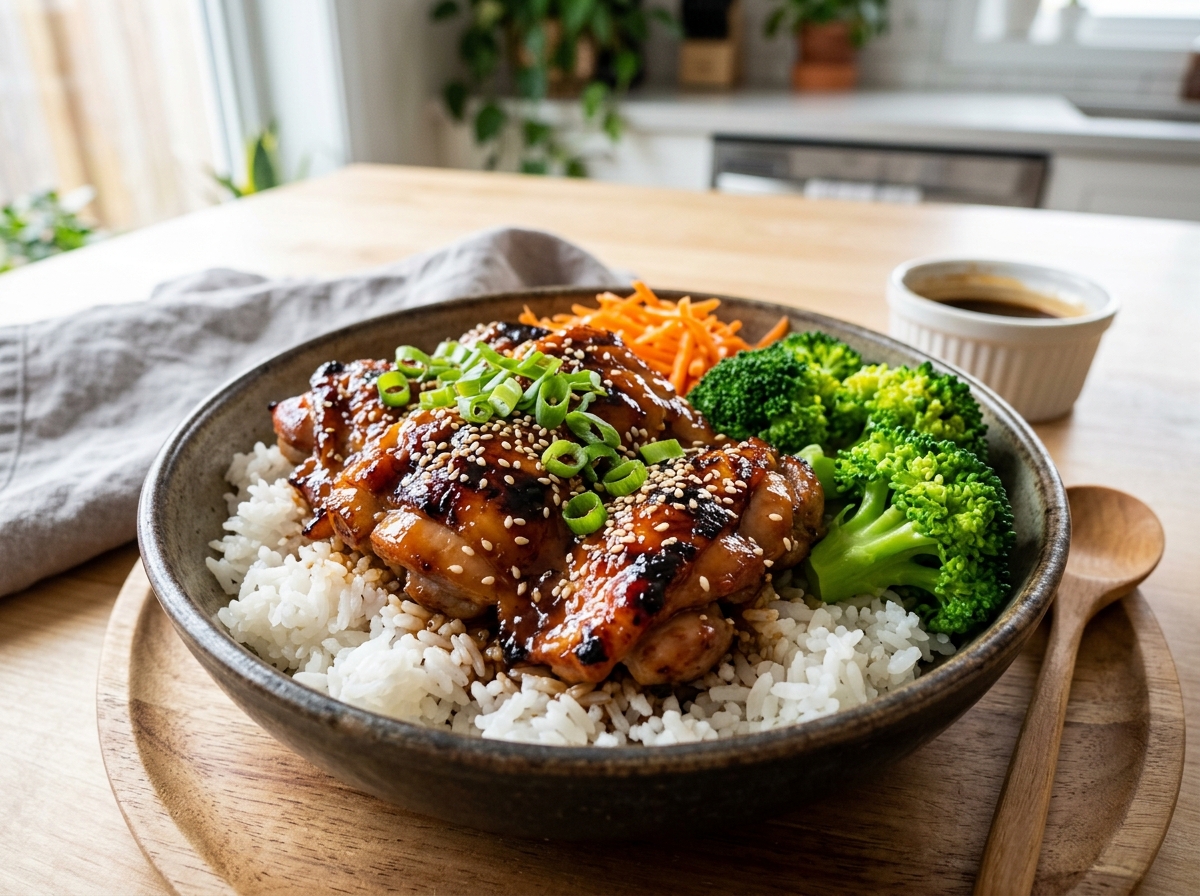
22. Double Chicken Teriyaki Rice Bowl
About 55 grams of protein. 20 minutes. Keeps 4 days.
The "double" is literal. Six ounces of cooked chicken instead of three, which is the single easiest way to cross 50 grams.
What you need
- 8 ounces raw chicken breast, sliced thin, yielding about 6 ounces cooked
- 1 cup cooked jasmine or short-grain rice
- 3 tablespoons soy sauce, 2 tablespoons mirin, 1 tablespoon honey, 1 teaspoon grated ginger
- 1 teaspoon cornstarch mixed with 1 tablespoon cold water
- 1 tablespoon neutral oil
- Steamed broccoli, sliced scallion, sesame seeds
How to make it
- Whisk together the soy sauce, mirin, honey, and ginger, then set aside.
- Heat the oil in a skillet over medium-high heat until it shimmers. Add the chicken in a single layer and cook undisturbed for 2 minutes, then stir.
- Cook 4 to 5 minutes total, until it reaches 165°F (74°C), then pour in the sauce.
- Let it bubble for 30 seconds, then stir in the cornstarch slurry and cook another minute until the sauce coats the chicken in a glaze.
- Serve over rice with broccoli, scallion, and sesame seeds.
Slicing the chicken thin before cooking, rather than after, creates far more surface area for the glaze to stick.
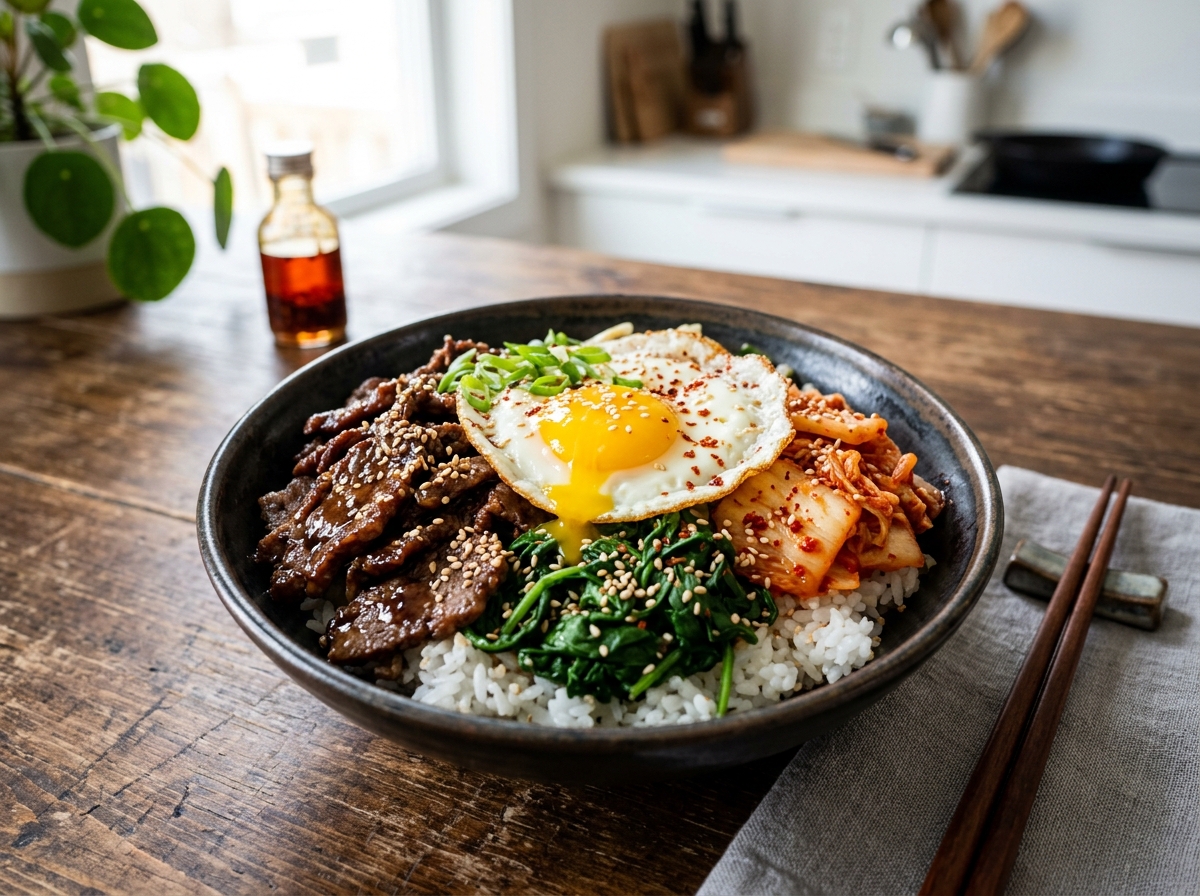
23. Korean-Style Beef And Kimchi Bowl With A Fried Egg
About 42 grams of protein. 15 minutes. Keeps 3 days.
Fast, deeply savory, and the kimchi adds fermented flavor that stops the meal from getting boring by day three.
What you need
- 6 ounces lean ground beef, 90% lean
- 1 cup cooked short-grain rice
- 1/2 cup kimchi, roughly chopped
- 2 tablespoons soy sauce, 1 tablespoon brown sugar, 1 teaspoon sesame oil
- 3 cloves garlic, minced; 1 teaspoon grated ginger
- 1 egg, 1 teaspoon oil
- Scallion, sesame seeds, sliced cucumber
How to make it
- Brown the beef in a dry hot skillet, breaking it up, for about 5 minutes. Do not add oil, since 90% lean releases enough fat.
- Push the beef aside, add the garlic and ginger to the bare pan, and cook for 30 seconds.
- Stir in the soy sauce, brown sugar, and sesame oil and let it reduce for 2 minutes until the beef is glazed and sticky.
- Fry the egg separately in the teaspoon of oil, keeping the yolk runny if you are eating it fresh, or fully set if packing it.
- Build the bowl with rice, beef, kimchi, cucumber, and the egg on top.
If you are packing this, cook the egg through. A runny yolk does not survive reheating.
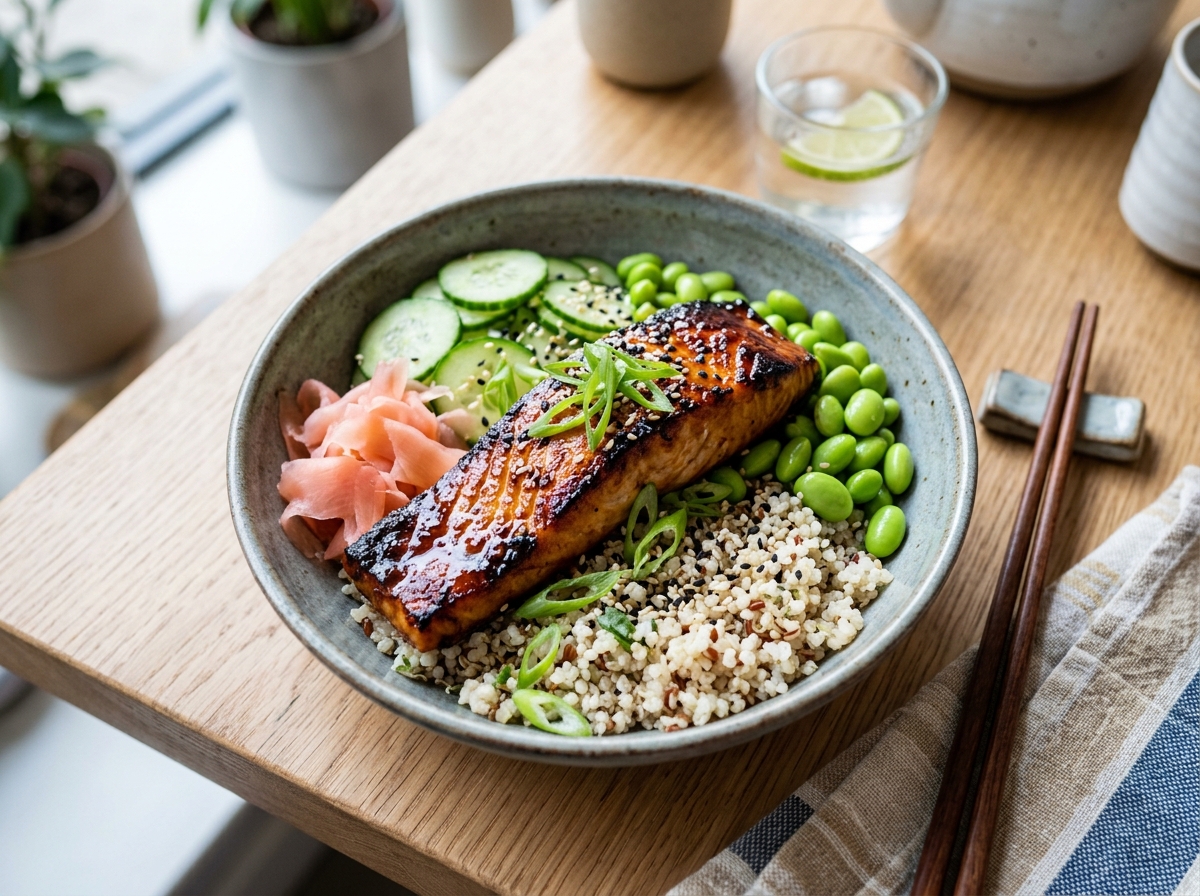
24. Miso Salmon, Quinoa, And Edamame Bowl
About 45 grams of protein. 25 minutes. Keeps 3 days.
Salmon brings omega-3 fats alongside the protein, and the miso glaze caramelizes into something genuinely restaurant-grade.
What you need
- 6 ounces salmon fillet, skin on
- 1 tablespoon white miso paste, 1 tablespoon mirin, 1 teaspoon honey, 1 teaspoon soy sauce
- 1/2 cup cooked quinoa
- 1/2 cup frozen shelled edamame
- Shredded carrot, sliced avocado, pickled ginger
- Sesame seeds
How to make it
- Heat the oven to 400°F (200°C). Whisk the miso, mirin, honey, and soy sauce into a thick paste.
- Pat the salmon dry and spread the glaze over the top and sides, leaving the skin bare.
- Bake on parchment for 12 to 14 minutes, until it flakes easily at the thickest point. Miso burns quickly, so check at 12.
- Boil the edamame for 3 minutes while the salmon cooks.
- Layer the quinoa, edamame, carrot, and salmon, then finish with avocado, pickled ginger, and sesame seeds.
Salmon is one of the few proteins that is genuinely good cold, so this does not need reheating.
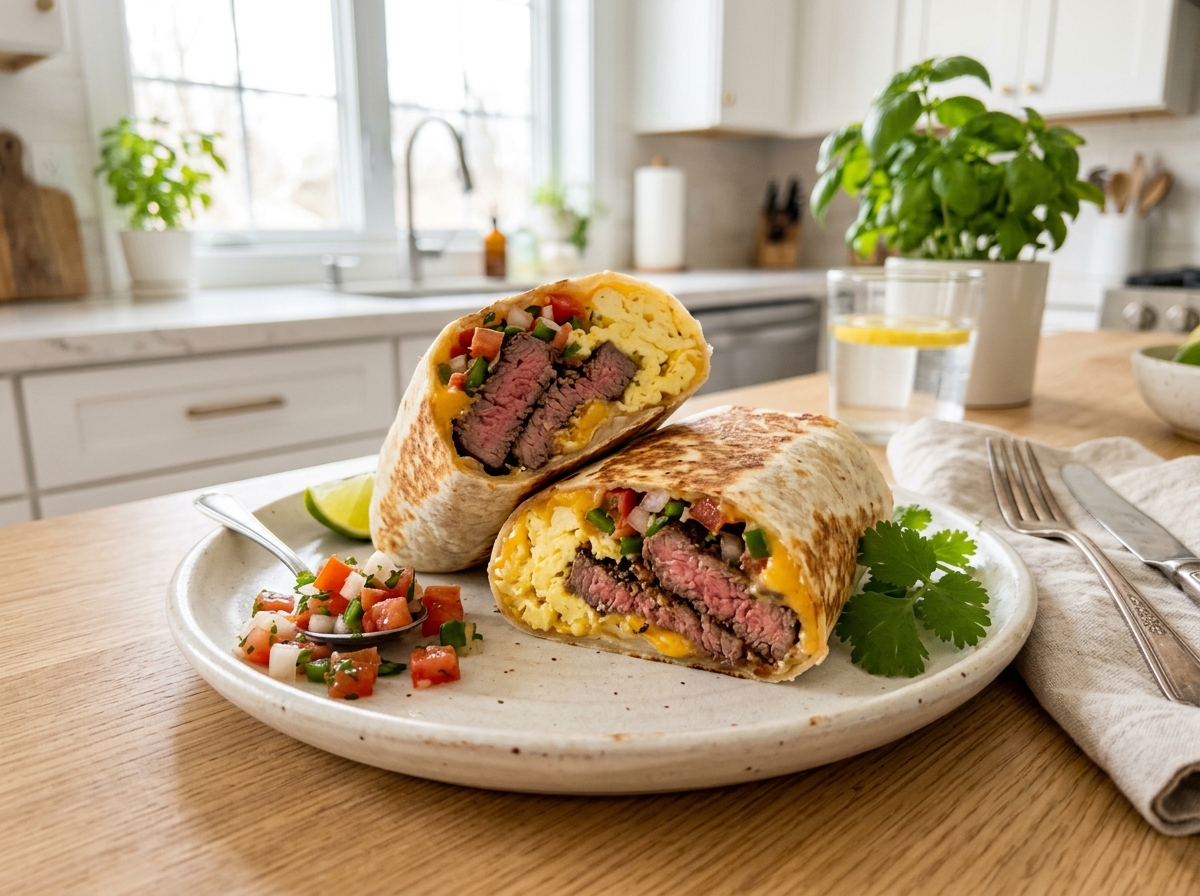
25. Steak And Egg Lunch Burrito
About 48 grams of protein. 20 minutes. Keeps 3 days, freezes 1 month.
Breakfast-for-lunch logic, and among the highest protein counts on this page from two sources that both cook in minutes.
What you need
- 5 ounces sirloin or flank steak
- 2 large eggs
- 1 large flour tortilla
- 1 ounce shredded cheese
- 1/4 cup black beans
- Salt, black pepper, 1/2 teaspoon cumin
- 1 teaspoon oil, hot sauce, salsa
How to make it
- Season the steak with salt, pepper, and cumin and let it sit at room temperature for 10 minutes. Cold steak cooks unevenly.
- Sear in a hot, oiled skillet for 3 to 4 minutes per side for medium, then rest for 5 minutes before slicing against the grain.
- Scramble the eggs gently in the same pan over low heat, pulling them off while still slightly loose.
- Warm the tortilla, then layer the beans, eggs, steak, and cheese down the center.
- Fold the sides in first, then roll from the bottom. Wrap in foil, and sear the wrapped burrito seam-side down in a dry pan for a minute if you want it sealed.
Resting the steak before slicing matters more than any other step here, because cutting it early loses the juice onto the board.
Related: Essential Habits And Tips For Maintaining A Healthy Lifestyle
How To Keep A Packed Lunch Safe Before You Eat It
This is the section most lunch roundups skip entirely, which is strange given that every one of these meals is designed to sit in a bag for hours.
The USDA defines 40°F to 140°F (4°C to 60°C) as the danger zone, where bacteria can double in number in as little as 20 minutes. Discard perishable food left in that range for more than two hours, and reduce that window to one hour when the surrounding temperature is above 90°F (32°C). You cannot see, smell, or taste the difference, which is why the clock matters more than your judgment.
Run through this checklist before you leave the house for lunch.
- Use an insulated bag, not a paper sack. A thin lunch bag with no insulation buys you almost nothing.
- Pack two cold sources, not one. An ice pack plus a frozen water bottle or frozen yogurt tube works, and the second one also doubles as a drink.
- Put the lunch in a fridge on arrival if one is available. At schools and offices, this is usually the simplest fix and costs nothing.
- Preheat a thermos for hot food. Fill it with boiling water, let it stand 5 minutes, tip it out, then add food heated to at least 165°F (74°C).
- Chill cooked food fully before packing. Warm food inside an insulated bag warms everything else around it.
- Know what doesn't need a cold source at all. Whole fruits and vegetables, hard cheese, canned or pouched meat and fish, breads, crackers, nut and seed butters, jelly, mustard, and pickles are all fine unchilled.
- Throw out anything that sat in the danger zone for more than two hours. Do not eat it and do not bring it home for later.
- Wash reusable containers and insulated bags regularly, since bags in particular get ignored for months.
None of this takes extra time once it becomes habit, and it removes the only real risk in any of the twenty-five meals above.
Turn Any Of These Into A Deficit Lunch Or A Bulking Lunch
One base recipe can serve two completely opposite goals with a handful of swaps. The chicken burrito bowl is a useful example, since it sits right in the middle at around 42 grams.
To move it toward a calorie deficit while keeping or raising the protein, make these changes.
- Cut the rice from one cup to half a cup and replace the volume with shredded cabbage or romaine.
- Swap sour cream or cheese for blended cottage cheese, which adds protein instead of fat.
- Keep the chicken portion the same, or increase it slightly, since protein is the last thing to cut.
- Double the salsa and pico, which adds flavor and bulk for almost no calories.
To shift the same bowl toward muscle gain, go the other direction.
- Raise the chicken from 4 ounces to 6 or 7 ounces cooked, which alone adds 15 to 20 grams.
- Keep the full cup of rice and add a second half cup, since carbohydrates support training volume.
- Add half an avocado and a tablespoon of olive oil for calorie density without bulk.
- Add a whole egg or a half cup of Greek yogurt as a secondary protein source.
The recipe never changes. Only the ratios do, which means you can cook one batch for a household with two different goals.
A 45-minute Sunday Prep That Covers Four Lunches
One focused session produces components rather than finished meals, which is what keeps lunch from getting boring by Wednesday. Four different lunches, one cook.
- Start the oven and the rice at the same time (0-5 minutes):Heat the oven to 425°F (220°C). Cook 2 cups dry brown rice or quinoa in a pot or rice cooker.
- Load one sheet pan (5 to 12 minutes):Toss 1.5 pounds of chicken thighs with harissa or chipotle on one half, and two rinsed, dried cans of chickpeas with cumin and oil on the other. Bake for 30 minutes.
- Steam a dozen eggs (12 to 25 minutes):Add half an inch of water, cover, cook 11 minutes, then transfer to ice water. Leave them unpeeled in the fridge.
- Make two sauces while things cook (25 to 35 minutes):Blend a full tub of cottage cheese with lime and salt for the crema. Whisk a jar of yogurt sesame dressing. Both keep for five days.
- Prep the vegetables (35 to 42 minutes):Shred a head of cabbage, grate two carrots, halve a pint of tomatoes. Store the cabbage dry in a container lined with paper towel.
- Cool and store (42 to 45 minutes):Let everything reach room temperature before you put the lids on, then refrigerate.
From those components, you can build the cabbage crunch bowl, the harissa chickpea bowl, the snack box, and a mason jar salad without cooking again until Thursday.
What Most People Get Wrong About High-protein Lunches
Four mistakes account for nearly every lunch that looks high-protein on paper and lands at half the target, much like learning the basics before trying something new.
Underestimating the portion:A "chicken breast" is not a fixed unit. A 4-ounce cooked portion is roughly the size of a deck of cards, and most people eyeballing it come in well under. Weighing the protein for a week recalibrates the eye permanently.
Counting the ingredient instead of the plate:Plenty of roundups list protein per cup of a single component rather than per assembled meal. A bowl described as having 18 grams of protein per cup of lentils might contain half a cup of lentils.
Dressing salads the night before:Greens dressed in advance are finished within hours. Always put dressing at the bottom of the jar or in a separate container.
Treating 15 grams as high protein:It is a snack. Anything under 20 grams should be paired with a second source before it counts as lunch, which is why the vegetarian section above stacks two proteins in every recipe.
Avoid those four and the protein number takes care of itself.
High Protein Lunch Questions, Answered
Is 20 Grams Of Protein Enough For Lunch?
It clears the minimum threshold and is reasonable for a smaller adult or a light eater. For muscle maintenance, muscle gain, or staying full until dinner, aim closer to 30 grams per meal.
Can You Eat Too Much Protein In One Meal?
Protein above the per-meal sweet spot still counts toward your daily total and is not wasted. The muscle-building response specifically tends to plateau around 40 grams for most adults, so 80 grams in one sitting does not double the benefit. Spreading intake across three or four meals is more efficient.
What Is The Cheapest High-protein Lunch?
Dried lentils, eggs, canned beans, and canned tuna deliver the most protein per dollar by a wide margin. On this page, the red lentil dal, egg salad sandwich, chickpea smash sandwich, black bean sweet potato bowl, and tuna mason jar salad are the five lowest-cost options, all comfortably under $3 per serving in most US supermarkets.
Does Eating More Protein Actually Help You Lose Weight?
The evidence most consistently supports protein for preserving lean mass and controlling appetite during a calorie deficit rather than for burning fat directly. Weight lossstill comes from the overall calorie deficit. Results also vary by age and training status, with some controlled trials in older adults finding no lean-mass advantage from higher intakes.
How Far Ahead Can I Prep Lunches For The Week?
Cook proteins, grains, and legumes up to four days ahead. Sauces and blended dressings hold five days. Leave dressings, avocado, fresh greens, and anything crunchy to add the morning you eat, which keeps day-four lunch from tasting like day-four lunch.
Final Words
The whole system comes down to three things. Know your number, which for most people is 25 to 40 grams depending on the goal. Build every lunch from one anchor plus one booster. Pack it so it survives the trip.
Everything else is preference. The lifter chasing 45 grams and the parent filling a bento box are running the same formula at different scales, which is why one Sunday cook can feed both.
Pick the one section above that matches your actual week, choose a single recipe from it, and make that one this week. One reliable lunch you will repeat beats twenty-five you bookmarked and never cooked.