Exploring World Religions - Key Beliefs And Practices
Religious beliefs often play a significant role in shaping social norms, political ideologies, and artistic expressions. By studying these faiths, we gain a deeper appreciation for the historical and contemporary forces that influence our world.
May 06, 2025
People around the world have created deep systems of belief that influence their lives, communities, and history. These different faiths offer special views on life, right and wrong, and the divine, forming the foundation of many human experiences.
When we step outside our own backgrounds to learn about these beliefs, we gain a better understanding of the global community and the shared human search for meaning. Knowing the variety of world religions shows the complex patterns of thought and practice that have guided civilizations for thousands of years.
Judaism

Judaism is one of the oldest religions that believes in only one God. It started over 3,000 years ago in the Middle East. The story begins with Abraham, who is considered the first Hebrew and the father of the Jewish people. He made a special agreement, or covenant, with God.
Moses is another important figure because he received the Torah, the first five books of the Hebrew Bible, at Mount Sinai. This event gave Jews their main laws and teachings. Important times in Jewish history include the Exodus from Egypt, led by Moses, and the Babylonian Exile, which shaped Jewish identity.
The main belief in Judaism is that there is only one God, and that the Jewish people have a special agreement with Him. This means they are chosen for a unique purpose. While waiting for the Messiah to come, Jews follow divine commandments and laws.
Jews practice their religion by following 613 commandments (Mitzvot) and Jewish law (Halakhah). They observe Shabbat every week as a day of rest and reflection, pray three times a day, follow dietary laws called Kashrut, and celebrate life events like Brit Milah (circumcision), Bar Mitzvah, and Bat Mitzvah.
The most important sacred text is the Tanakh, which includes the Torah, Prophets (Nevi'im), and Writings (Ketuvim). The Oral Law, written down in the Mishnah and Talmud, explains these texts and guides Jewish practices.
Today, the largest Jewish communities are in Israel and the United States. As of 2023, there are about 15.8 million Jews worldwide, with 7.2 million in Israel and 6.3 million in the U.S. Symbols in Judaism include the Star of David (Magen David), the Menorah (a seven-branched candelabrum), the Mezuzah (a case on doorposts), and Chai (meaning "life").
Judaism has greatly influenced Western ethics, law, and social values. Its focus on justice, righteousness, and rule of law has left a lasting impact. Though initially resistant to visual art due to prohibitions against idolatry, Jewish artistic expression has evolved, especially in illuminated manuscripts and ceremonial objects.
Christianity

Christianity is the world's largest religion and began in Judea in the 1st century AD. Jesus Christ is the central figure, believed by Christians to be the Son of God and the Messiah. He preached about love, forgiveness, and salvation.
His death on the cross and resurrection are key beliefs, seen as sacrifices for humanity's sins. The twelve apostles and Paul were crucial in spreading Jesus' teachings across the Roman Empire. Emperor Constantine's support in the 4th century helped the early church grow.
The main beliefs center around the Trinity: one God in three persons; Father, Son (Jesus Christ), and Holy Spirit. Christians believe in Jesus' divinity, his perfect life, his sacrifice on the cross, his resurrection, and his ascension into heaven. Salvation comes through faith in Jesus Christ.
Key practices include baptism, symbolizing new life in Christ, and the Lord's Supper (Communion), remembering Jesus' last meal with his disciples. Other practices involve attending church services, praying, and ceremonies for weddings and funerals. Many Christians also look out for spiritual guidance on how to be productivein their daily lives, aligning their work and personal goals with their faith.
The Holy Bibleis the sacred text, consisting of the Old Testament (shared with Judaism) and the New Testament, which tells about Jesus and the early church. Different Christian groups may have slight differences in their Bible versions.
Around 2.5 billion people follow Christianity, spread across the Americas, Europe, Africa, and Asia. Important symbols include the cross or crucifix, representing Christ's sacrifice; the dove, symbolizing peace and the Holy Spirit; the lamb, representing Jesus as the Lamb of God; and the anchor, symbolizing hope in Christ.
Christianity has deeply influenced Western art, with many masterpieces depicting biblical scenes. Holidays like Christmas and Easter have shaped the calendar, and Christian values have led to developments in hospitals and adoption systems. Christian art, initially resisted due to its Jewish roots and opposition to pagan idolatry, eventually became vital for religious expression and teaching.
Islam
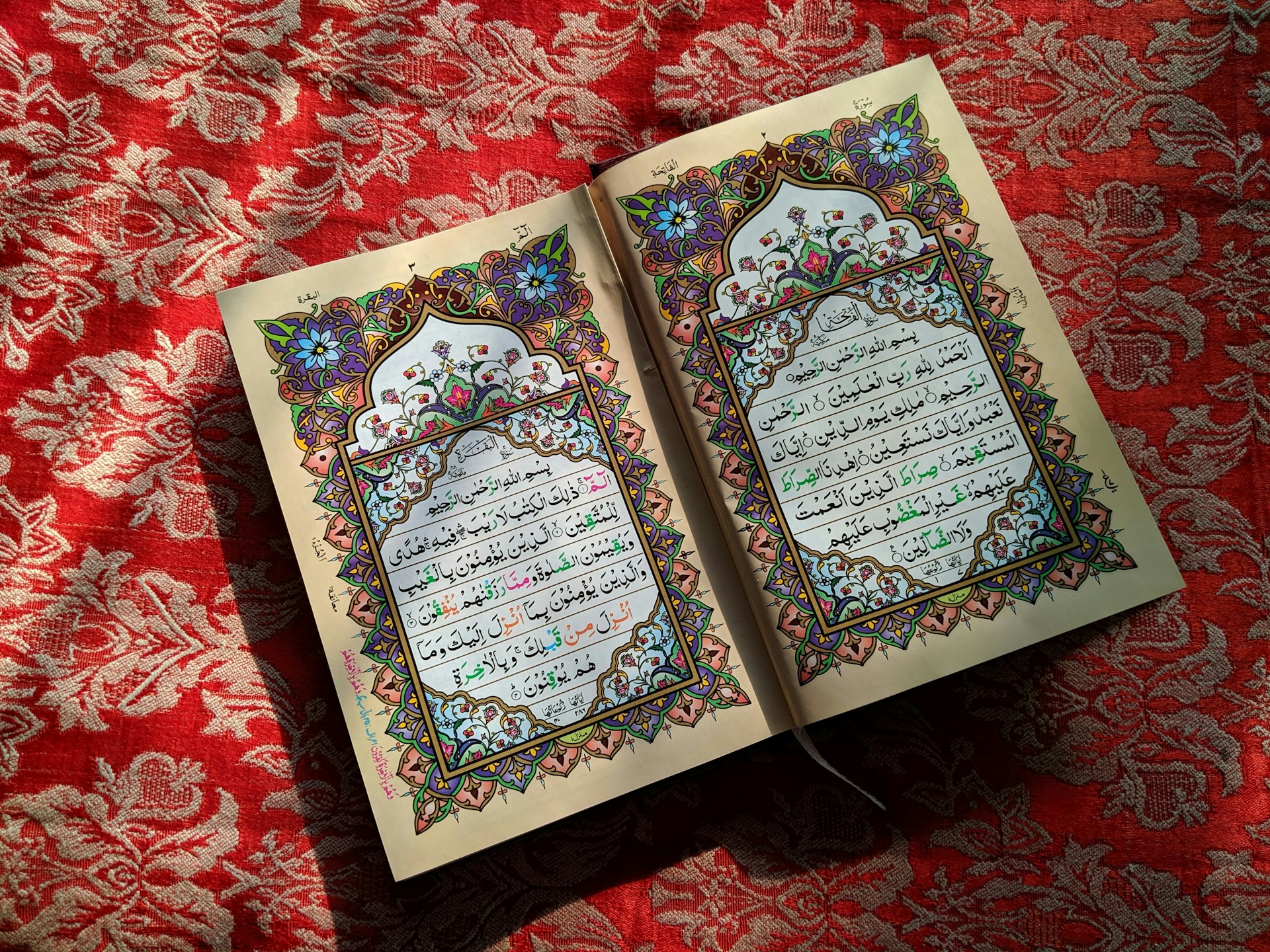
Islam is the second-largest religion globally and started in Mecca in the 7th century CE with Prophet Muhammad. Muslims believe Muhammad received messages from God (Allah) through the angel Gabriel, forming the Quran. The Hijra, Muhammad's move from Mecca to Medina in 622 CE, was a major turning point.
Core beliefs include the absolute oneness of Allah (Tawhid), belief in prophets like Adam, Noah, Abraham, Moses, Jesus, and Muhammad as the final prophet; belief in angels; belief in holy books including the Torah, Psalms, Gospel, and Quran; belief in the Day of Judgment; and belief in the afterlife.
The Five Pillars of Islam guide Muslim practices: Shahada (declaring faith in God and Muhammad), Salat (five daily prayers facing Mecca), Zakat (charitable giving), Sawm (fasting during Ramadan), and Hajj (pilgrimage to Mecca).
The Quran is the main holy text, believed to be God's literal words given to Muhammad. The Sunnah, teachings and examples of Muhammad, documented in Hadiths, also guides Muslims.
There are approximately 1.9 billion Muslims, mostly in North Africa, the Middle East, and Asia, with Indonesia and Pakistan having the largest populations. Key symbols include the crescent moon, marking Ramadan's start; the star and crescent, linked to Islam; the word Allah in Arabic calligraphy; and the Kaaba in Mecca, the most sacred site.
Islamic culture has significantly affected art, architecture, science, and philosophy. Religious prohibitions on figural representation led to intricate calligraphy, geometric patterns, and arabesques in Islamic art and architecture. Many Muslims emphasize the importance of maintaining a healthy lifestyleas part of their faith, believing that caring for one's body is a form of worship and gratitude to Allah.
Baháʼí Faith
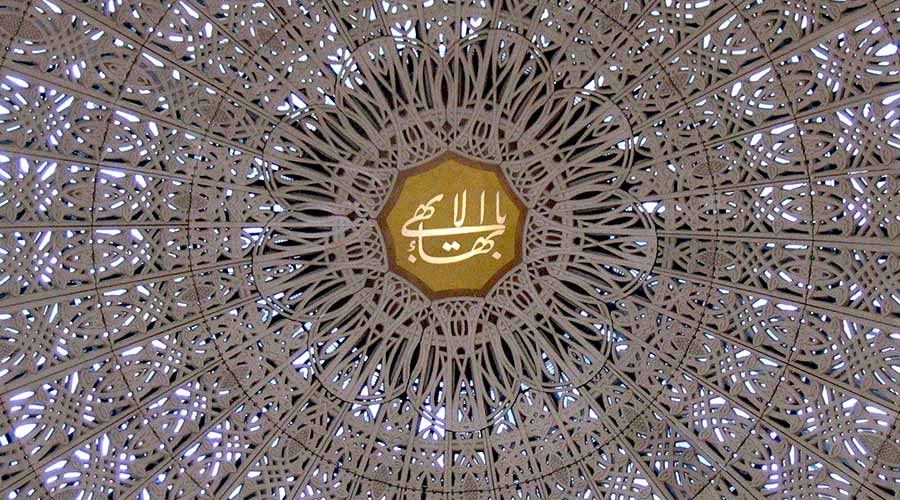
The Baháʼí Faith started in 19th century Iran. The Báb announced in 1844 that he was heralding a new messenger of God. Baháʼu'lláh, one of the Báb’s followers, proclaimed in 1863 that he was this promised messenger. His son, ʻAbdu'l-Bahá, and grandson Shoghi Effendi were key in spreading the faith.
Core beliefs include the oneness of God, humanity, and religion, understood through progressive revelation, God revealing His will through messengers over time. The faith emphasizes eliminating prejudice, equality between men and women, harmony of science and religion, and building a peaceful global society.
Major practices include daily prayer, meditation on Baháʼí writings, an annual nineteen-day fast, and participation in the Nineteen Day Feast for worship, consultation, and fellowship. There is no clergy in the Baháʼí Faith.
Sacred texts include writings from the Báb, Baháʼu'lláh (like the Kitáb-i-Aqdas and Kitáb-i-Íqán), ʻAbdu'l-Bahá, Shoghi Effendi, and the Universal House of Justice.
The Baháʼí Faith is present in nearly every country, with 5 to 8 million adherents. India and the U.S. have some of the largest Baháʼí populations. Key symbols include the nine-pointed star, Greatest Name, and Ringstone Symbol, depicting relationships between God, His messengers, and humanity.
The Baháʼí Faith encourages uplifting artistic expression. Its principles promote unity, social justice, and the establishment of a global civilization, believing all major religions are part of a single divine plan.
Hinduism
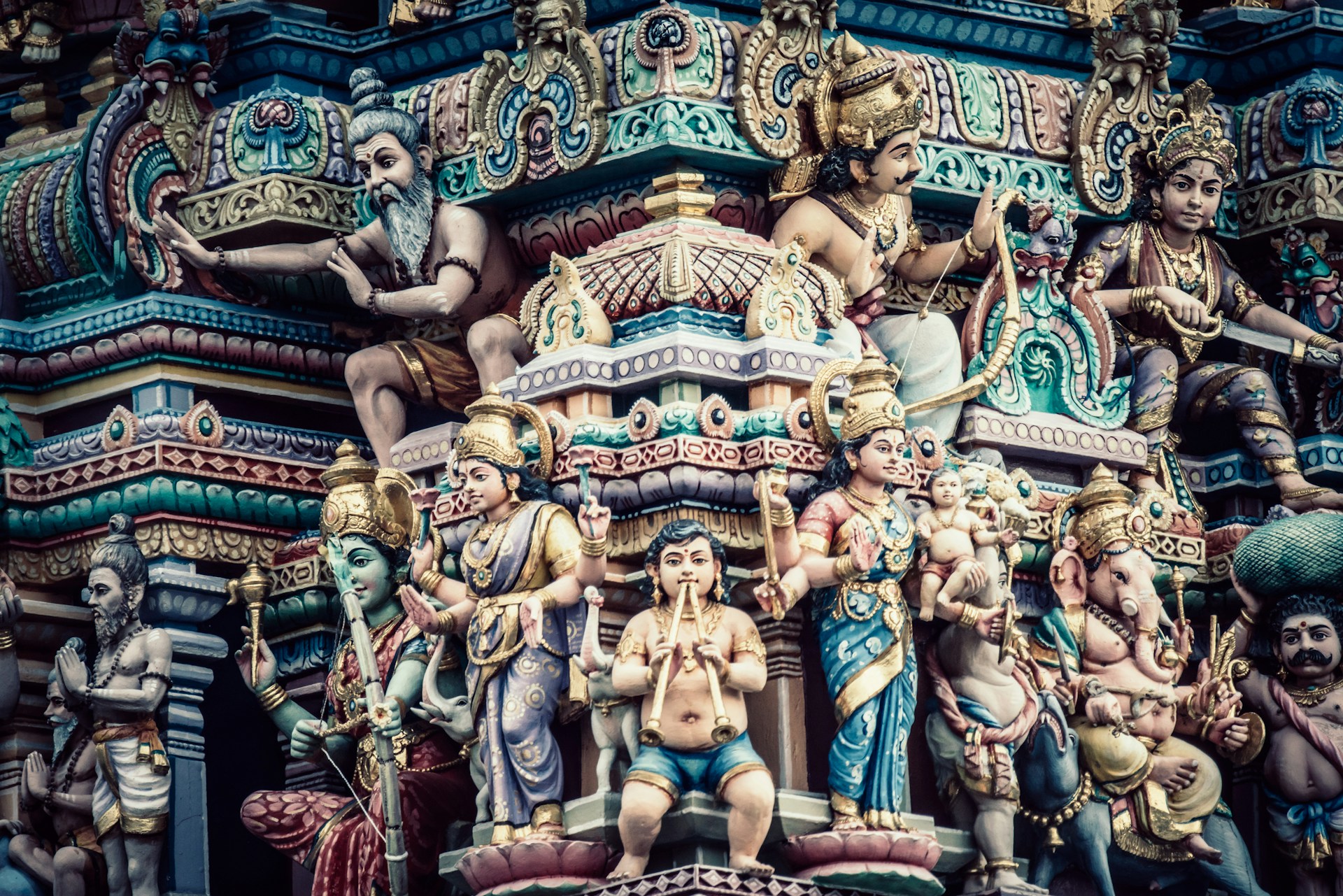
Hinduism, also known as Sanatana Dharma, is the oldest religion, starting in the Indus Valley Civilization and Vedic period in the Indian subcontinent. Unlike other religions, it doesn't have a single founder. "Hindu" historically referred to people from South Asia.
Core beliefs include Brahman (ultimate reality), Dharma (right conduct), Karma (cause and effect), Samsara (cycle of birth and rebirth), and Moksha (liberation). The Trimurti - Brahma (creator), Vishnu (preserver), and Shiva (destroyer) - are significant deities.
Practices include daily rituals like puja (worship) and meditation, temple visits, festivals such as Diwali and Holi, and life cycle ceremonies. The four stages of life guide Hindus.
The primary scriptures are the Vedas (Rigveda, Samaveda, Yajurveda, Atharvaveda), Upanishads, Epics (Ramayana, Mahabharata), and Puranas. Most Hindus live in India and Nepal. With around 1.1 billion followers, it's the third-largest religion globally.
Important symbols include Om (Aum), Swastika, Lotus, and Trishula (trident). Hinduism has deeply influenced Indian art, architecture, music, dance, literature, social values, and practices like yoga. Dharma provides an ethical and social framework.
Buddhism
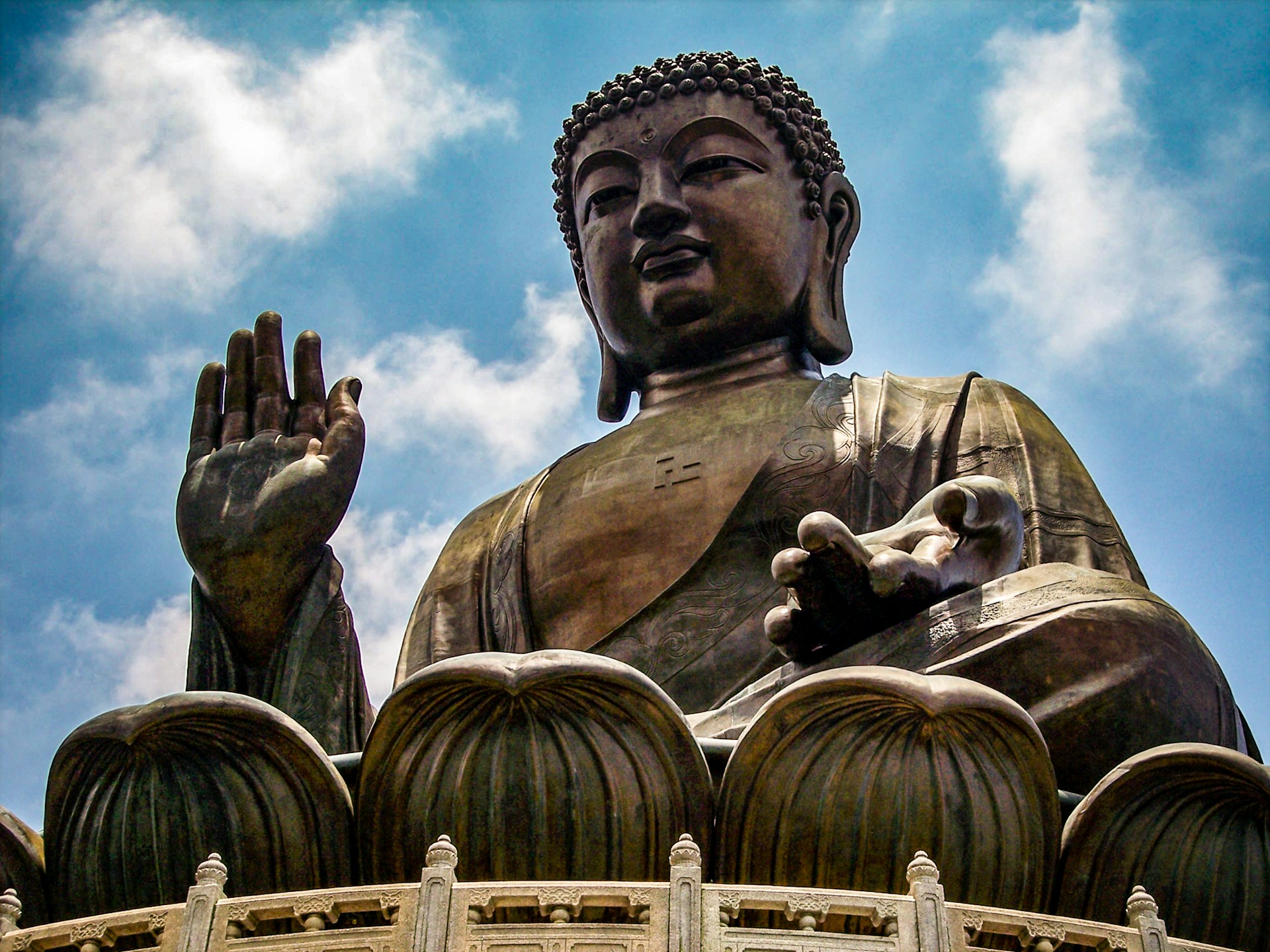
Buddhism originated in ancient India around the 5th century BCE with Siddhartha Gautama, known as the Buddha. His teachings focus on enlightenment (Nirvana), liberation from suffering.
Core beliefs include the Four Noble Truths, explaining suffering and how to end it, and the Eightfold Path, guiding how to end suffering through right understanding, thought, speech, action, livelihood, effort, mindfulness, and concentration. Concepts like Karma, Samsara, and Anatman (non-self) are also key.
Practices include meditation types like Samatha and Vipassana, chanting, reciting sutras, and following monastic rules. The Five Precepts guide daily life. The earliest scriptures are in the Tripitaka (Pali Canon), containing Buddha's discourses and monastic rules. Different schools developed their own canons, like the Mahayana Sutras and Tibetan Canon.
Buddhism spread widely in Asia, with significant followings in China, Thailand, Japan, Myanmar, and Southeast Asia. Around 0.5 billion Buddhists exist globally.
Important symbols include the Dharma Wheel, Lotus flower, and Bodhi Tree. Buddhism has profoundly influenced Asian art, architecture, ethical thought, mindfulness practices, and social reform movements. The Middle Way advocates balance and moderation.
Jainism
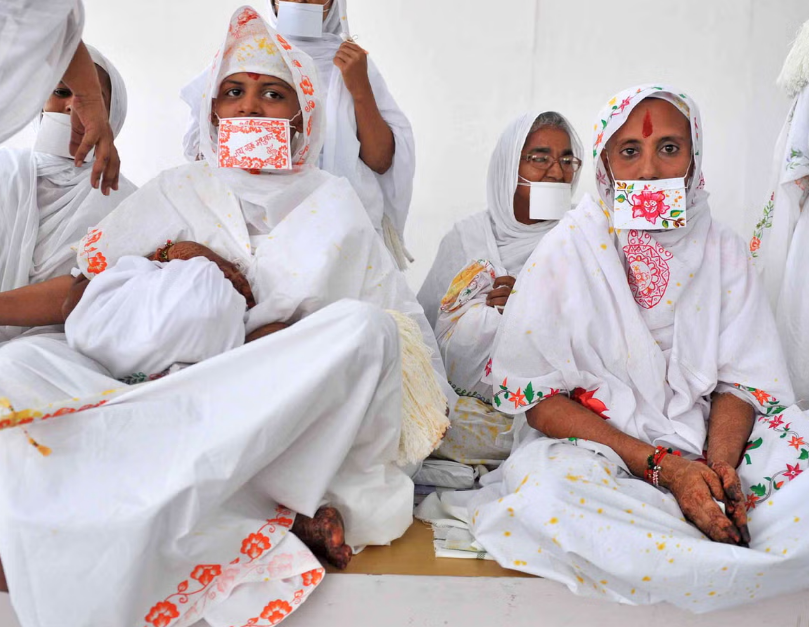
Jainism traces back to 24 Tirthankaras (spiritual teachers). Rishabhanatha was the first, while Mahavira, living around the 6th century BCE, was the 24th and last Tirthankara. Jains consider the religion eternal.
Core beliefs include understanding reality as Jiva (living souls) and Ajiva (non-living matter). Ahimsa (non-violence) is central, along with Karma, Samsara, and Moksha. The Three Jewels - Right Faith, Right Knowledge, and Right Conduct - lead to liberation.
Practices include rigorous asceticism, vows (Mahavratas and Anuvratas), meditation, fasting, and Sallekhana (voluntary fast to death). Rituals include Samayika (meditation) and Pratikramana (repentance). Worship occurs at temples dedicated to Tirthankaras.
Sacred texts are the Agamas, considered teachings of the Tirthankaras. The Jain canon divides into Shvetambara and Digambara traditions with some differences in accepted texts.
Primarily concentrated in India, Jainism also exists in Kenya, the U.S., U.K., and Canada. Estimates range from 4 to 12 million adherents globally, with 6.3 million in 2020.
Important symbols are the Swastika, Jain emblem, hand with a wheel, and Om. Jainism has influenced Indian art and architecture, particularly in Jain temples and sculptures. Ahimsa has impacted Indian ethics and inspired non-violence movements.
Sikhism
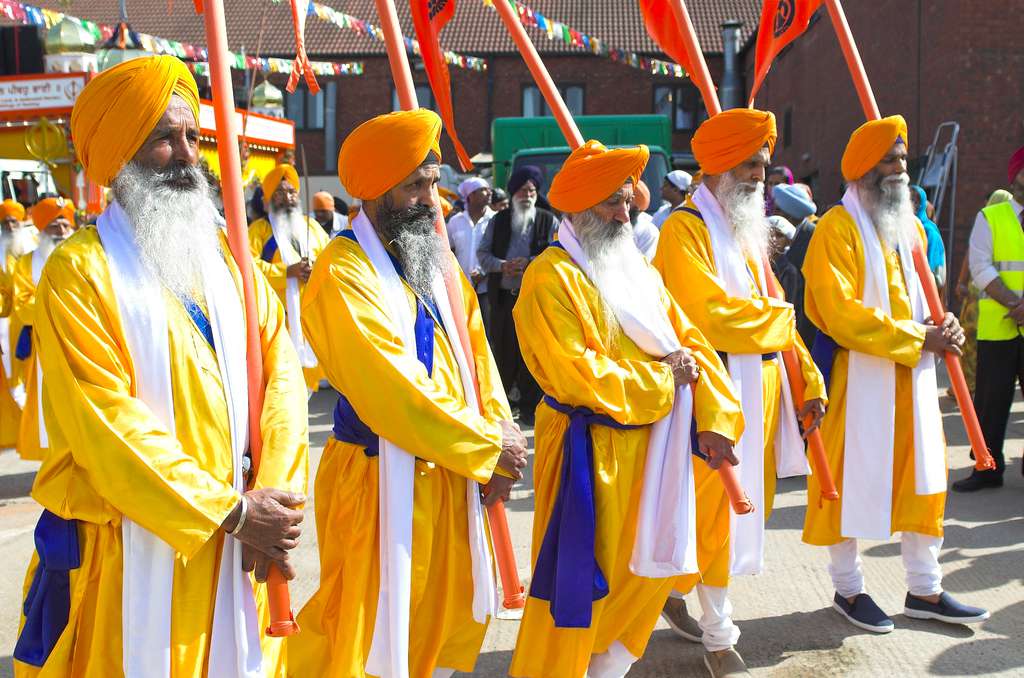
Sikhism is one of the youngest major religions, founded in late 15th century Punjab, India, by Guru Nanak Dev Ji. Ten Gurus guided the community, with Guru Gobind Singh establishing the Khalsa in 1699.
Core beliefs include monotheism (one God, Ik Onkar), equality of humankind, selfless service (Seva), honest living (Kirat Karni), and remembering God's name (Nam Japna). Sikhism rejects idol worship, the caste system, and ritualism.
Practices include remembering God, earning an honest living, and sharing with the community. Worship happens at Gurdwaras (temples). Important ceremonies include Amrit Sanskar (Khalsa initiation) and Anand Karaj (marriage). Many initiated Sikhs follow the Five Ks: Kesh (uncut hair), Kangha (wooden comb), Kara (steel bracelet), Kachera (cotton undergarment), and Kirpan (ceremonial sword).
Sacred texts are the Adi Granth (Guru Granth Sahib), considered the living Guru, and the Dasam Granth.
Most Sikhs live in Punjab, India, with significant communities in Canada, the U.K., the U.S., and elsewhere. Around 25-30 million Sikhs exist globally, with 29 million in 2020.
Their symbols are the Khanda, Nishan Sahib (flag), and the Five Ks. Sikhism has influenced art, architecture (Gurdwaras), music, and social values, emphasizing selfless service and justice. The concept of Miri-Piri highlights spiritual and temporal authority.
Confucianism
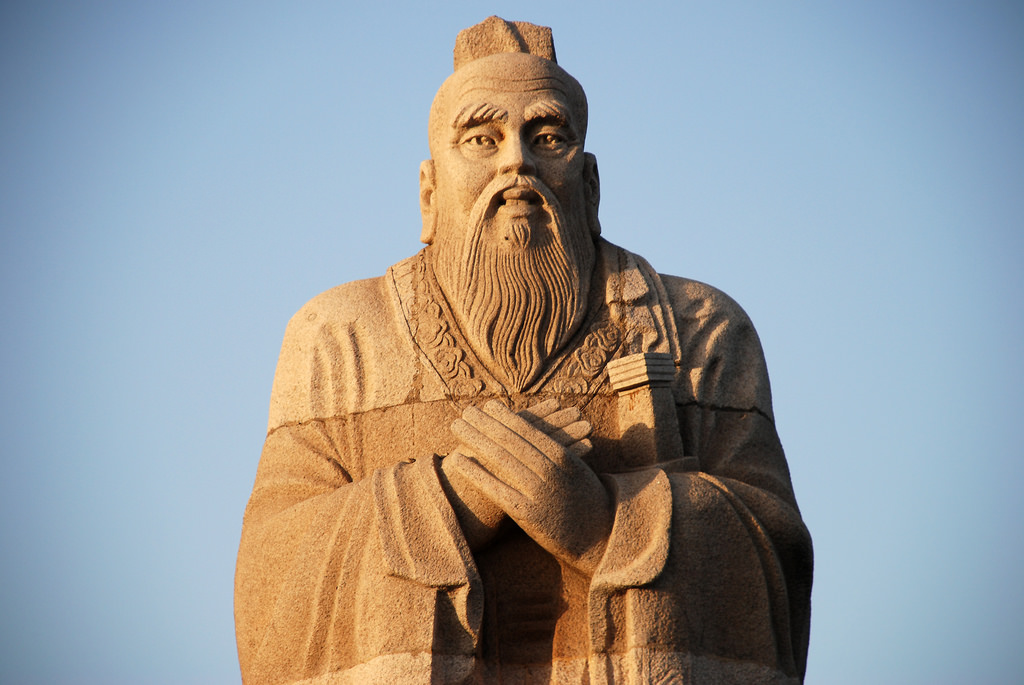
Confucianism started in ancient China with Confucius (551-479 BCE) as its founder. It developed during the Zhou Dynastyand became a dominant philosophy in China.
Core beliefs emphasize social harmony achieved through virtuous hierarchical relationships and filial piety (respect for elders and ancestors). Ethics, morality, and cultivating Junzi (the ideal person) are stressed for good governance and societal well-being.
Practices include ancestor veneration, rituals maintaining social order, and self-cultivation through education and moral development. Core texts are the Analects, Five Classics, and Four Books covering history, poetry, rituals, and philosophy.
Confucianism has significantly influenced China, Korea, Japan, and Vietnam. While exact adherent numbers are hard to quantify due to cultural integration, hundreds of millions have been shaped by it. In 2020, there were 8.7 million adherents.
Symbols relate to social harmony, like Li (ritual propriety) and Ren (benevolence). Confucianism has deeply influenced Chinese society, governance, education, family structures, and various arts and literature. Its emphasis on meritocracy and social responsibility has shaped East Asian cultures for centuries.
Taoism

Taoism originated in ancient China, traditionally traced back to Lao Tzu (6th century BCE), credited with writing the Tao Te Ching. Its formal establishment is often dated to the 2nd century CE.
Core beliefs emphasize living in harmony with the Tao (the Way), the fundamental principle of the universe. Key concepts include naturalness (Ziran), simplicity, spontaneity, and Wu Wei (non-action or effortless action). A pantheon of deities and immortals is often involved.
Practices aim for balance and harmony with the Tao, including meditation, Tai Chi, Qigong, Feng Shui, and rituals related to health, longevity, and spiritual cultivation.
Primary scriptures are the Tao Te Ching and Zhuangzi. The Taoist Canon (Daozang) is a vast collection of writings. Taoism is mainly practiced in China and other East Asian countries. Adherent numbers vary widely, ranging from 12 to 173 million. In 2020, there were 8.7 million adherents.
The most recognizable symbol is Yin and Yang, representing interconnectedness of opposing forces. Other nature and balance-related symbols are also significant.
Taoism has influenced Chinese philosophy, medicine (Traditional Chinese Medicine), art (painting, calligraphy), landscape design, and martial arts like Tai Chi. Its focus on living in harmony with nature has impacted environmental consciousness.
Shinto

Shinto, meaning "way of the Kami," is Japan's indigenous religion, dating back to ancient times without a single founder. It involves worshiping Kami, spirits or deities believed to reside in natural elements, sacred places, and ancestors.
Core beliefs emphasize reverence for Kami, ancestors, and nature. Values include purity (Kiyome), harmony (Wa), and respect for tradition. Some describe it as polytheistic, while others see it as animistic or pantheistic due to Kami's presence in all aspects of existence.
Practices center around visiting shrines (Jinja) to worship Kami, purification rituals (Misogi), and participating in festivals (Matsuri) celebrating nature, agricultural cycles, and local deities. Offerings (Heihaku) are often made.
Shinto lacks a single definitive scripture. Important texts recording mythology and traditions include the Kojiki (Record of Ancient Matters) and Nihon Shoki (Chronicles of Japan).
Shinto is primarily practiced in Japan. Estimates suggest around 89-104 million adherents, potentially including those practicing Buddhism. In 2020, there were 2.7 million adherents.
Symbols relate to specific Kami or sacred elements, like Torii gates marking sacred spaces, Shimenawa ropes demarcating sacred areas, and sacred trees or rocks believed to house Kami.
Shinto has deeply shaped Japanese culture, influencing art, shrine architecture, traditions, and the relationship with nature. Purity and harmony continue to reflect in various aspects of Japanese life.
Frequently Asked Questions
What Is The Study Of Religions Called?
Theology is the study of religious belief from a religious perspective, with a focus on the nature of divinity. It is taught as an academic discipline, typically in universities and seminaries.
How Do Religions Address The Question Of The Afterlife?
Beliefs about the afterlife vary significantly. Abrahamic faiths typically envision an eternal state in heaven or hell based on earthly life. Dharmic religions often describe a cycle of death and rebirth from which one seeks liberation. Other traditions have concepts of ancestral realms, spiritual planes, or dissolution into a universal consciousness.
Is It Possible To Study Religions Without Being Religious?
The academic study of religion is a distinct field that examines religious beliefs, practices, and institutions from a neutral, analytical perspective. One does not need to hold religious beliefs to understand their impact on culture, society, and individual lives.
What Is The Importance Of Sacred Texts?
Sacred texts provide a basis for doctrine, ritual, and moral conduct. Interpretation of these texts is often a key aspect of religious scholarship and practice within a tradition.
Final Thoughts
Looking at the many ways people find meaning and connect with something greater gives us a strong view of our shared human experience. The different faiths around the world keep influencing our world in big ways.
Even a short look at these religions can help us understand and appreciate the complex mix of human beliefs better. It reminds us that even though our beliefs might be different, the basic search for purpose and connection is something all humans share.